

Best Coffee Beans for Smooth Flavor
Table of Contents
- What Makes Coffee Beans Smooth
- Single Origin vs Blend Coffee Explained
- Best Roast Levels for Smoothness
- Top Smooth Coffee Bean Options
- How to Brew Smooth Coffee at Home
- Avoiding Bitterness: Common Brewing Mistakes
- Freshness and Storage for Peak Flavor
- Frequently Asked Questions
Last Updated: September 20, 2026
What Makes Coffee Beans Smooth
The best coffee beans for smooth flavor come down to three factors: low acidity, balanced body, and the absence of harsh or bitter compounds. When these elements align, you get a cup that feels silky on the palate rather than sharp or astringent.
Acidity refers to brightness and liveliness, not sourness. Low-acidity beans produce mellow, rounded flavors. Body describes mouthfeel: smooth coffees have medium to full body that coats the palate without feeling thin or watery.
Medium roasts deliver the smoothest cups by preserving natural sweetness while reducing harsh compounds. Darker roasts taste bitter and ashy; lighter roasts emphasize acidity. Medium roasts hit the sweet spot.
Beans from Brazil and Peru naturally produce lower-acidity profiles. The washed process creates cleaner, more refined flavors than natural or dry processing. Far Destinations Coffee sources beans from regions and uses processes that align with smooth coffee requirements.
Single Origin vs Blend Coffee Explained
Single-origin coffees come from one farm or region; blends combine multiple origins. Both deliver smooth flavor, it depends on whether you prioritize consistency or exploration.
Single-origin beans showcase distinct regional character, Peruvian delivers silky caramel and citrus; Brazilian brings elegant cocoa. You taste terroir, altitude, soil, and climate. They vary slightly harvest to harvest, which some enjoy and others find unpredictable.
Blends prioritize consistency, combining beans from different regions to create stable flavor year-round. They let roasters highlight specific notes like nutty, sweet chocolate, and mild citrus by balancing complementary beans.
Blends offer a practical advantage: skilled roasters select complementary beans to create smoother cups than single origins alone. Far Destinations Coffee's House Blend combines Central and South American coffees using natural and washed processes for consistent smoothness.

Best Roast Levels for Smoothness
Medium roast is the gold standard for smooth coffee, removing harsh compounds while preserving natural sweetness and complexity. Beans reach the first crack and are removed shortly after, creating the signature medium-brown color.
Light roasts emphasize acidity and origin characteristics with bright, crisp flavor, but sharp acidity feels harsh on the palate. They suit complexity seekers but aren't ideal for smoothness.
Dark roasts develop deeper, bolder flavors but also more bitter compounds and burnt notes that work against smoothness. Longer roasting makes technique overshadow origin character. Dark cups trade smoothness for intensity.
Medium roasts deliver body and richness while maintaining smoothness. Most specialty roasters focus on medium roasts because they showcase origin and skill without sacrificing drinkability.
| Roast Level | Acidity | Body | Smoothness | Best For |
|---|---|---|---|---|
| Light | High | Thin | Low | Complexity seekers |
| Medium | Balanced | Medium-Full | High | Smooth flavor priority |
| Dark | Low | Full | Low | Bold flavor preference |
Top Smooth Coffee Bean Options
The right beans make an immediate difference. Here are the best coffee beans for smooth flavor from Far Destinations Coffee, each selected for refined, pleasant cups without bitterness.
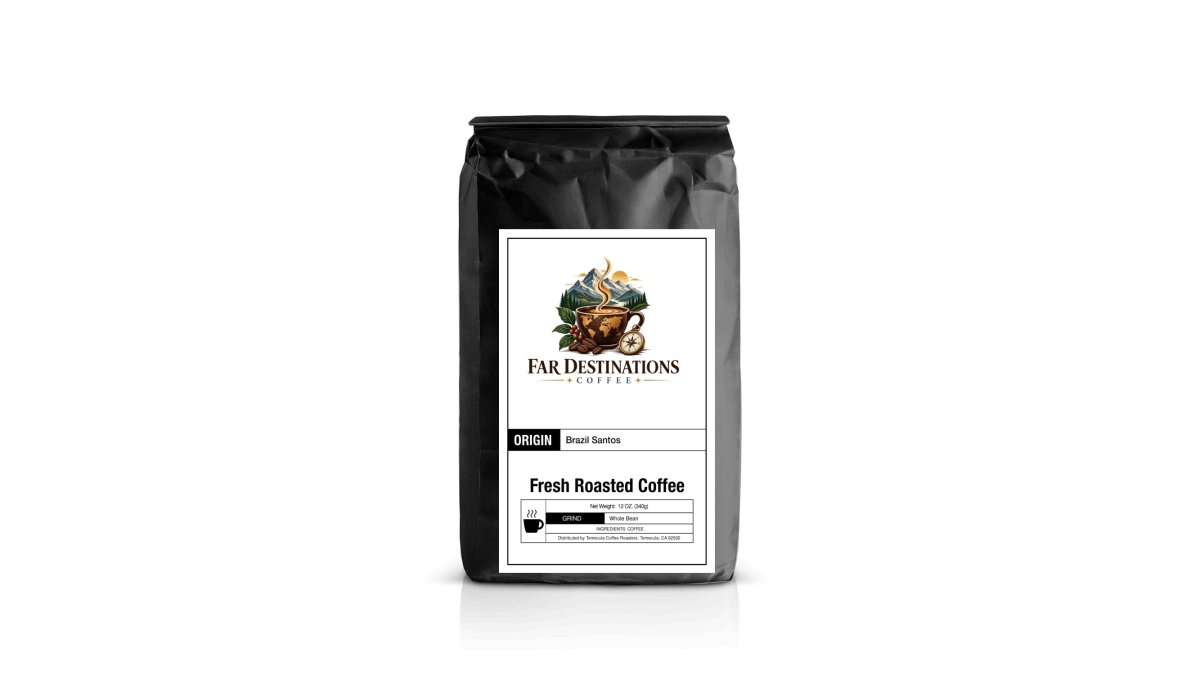
Brazil Santos: Single-Origin Cocoa Elegance
Brazil Santos ($22.99) is a medium roast single-origin from Fazenda Santa Barbara. The beans grow at 750-1050 meters on volcanic loam soil, contributing to naturally low acidity and smooth character.

The tasting profile is elegant and cocoa-forward with chocolate notes and clean, sweet finish. Pulped natural and sun-dried processing creates a balanced, refined cup that works in any brew method.
Brazilian single-origins rarely disappoint on smoothness. The region's altitude and soil naturally produce low-acidity coffee. Brazil Santos is the entry point that justifies the specialty coffee investment.
House Blend: Consistent, Clean Smoothness
House Blend ($22.99) combines select Central and South American coffees in medium roast. Every bag delivers the same balanced, clean cup.
The flavor profile includes nutty, sweet chocolate, mild citrus, and clean bright finish with medium body that feels substantial. The blend uses natural/dry and washed/sun-dried beans to balance characteristics, delivering consistent taste every time.
This blend addresses the unpredictability of single-origins. You're paying for consistency and the roaster's skill in balancing multiple origins into one cohesive flavor.
Peru: Silky Caramel and Citrus Notes
Peru ($22.99) is a medium roast single-origin from Cooperativa Agricola de Servicios Norandino. The altitude range of 1100-1700 meters and clay mineral soil produce a distinctly different yet equally smooth profile.
The tasting notes are salted caramel, silky sweet, and citrus. Gully-washed and sun-dried processing creates a clean cup with subtle complexity. Gentle citrus and caramel sweetness create a silky mouthfeel.
Peruvian coffee occupies a middle ground, more complex than blends but more consistent than some single-origins. The altitude and processing naturally produce low acidity. If you want to explore beyond Brazil, Peru is the next logical step.
Peru Decaf: Smooth Without the Caffeine
Peru Decaf ($22.99) delivers the same silky caramel and citrus profile as the regular Peru, but decaffeinated using the Swiss Water Process. This matters because many decaf coffees taste flat or hollow, the decaffeination process can strip flavor along with caffeine.

The Swiss Water Process preserves flavor by using water instead of chemical solvents. The result tastes like real coffee, not a compromise. You get the same smooth, sweet profile as the caffeinated version, making this an excellent option for afternoon or evening brewing without sleep disruption.
This option solves a real problem: most people assume decaf means accepting lower quality. Peru Decaf proves otherwise. If you want to enjoy smooth coffee throughout the day without caffeine, this single-origin delivers.
Cold Brew Coffee: Chocolate and Toffee Blend
Cold Brew Coffee ($22.99) is a medium roast blend specifically designed for cold brewing. The flavor profile emphasizes chocolate, toffee, and floral tones, flavors that shine when extracted slowly in cold water.
Cold brewing naturally produces smooth coffee. The slow extraction over 12-24 hours pulls sweetness and body while leaving harsh compounds behind. This blend is roasted and selected to maximize what cold water extraction does best. The result is a naturally smooth, sweet concentrate that tastes excellent over ice or diluted with water.
This option is for people who drink cold coffee regularly. A standard medium roast works fine in cold brew, but this blend is optimized for the method. The toffee and chocolate notes emerge more prominently, and the overall cup feels smoother than cold brew made from beans intended for hot water.
How to Brew Smooth Coffee at Home
The best beans matter, but brewing technique determines whether you actually achieve smoothness. Common mistakes undermine even premium beans.
Use water between 195-205°F. Boiling water (212°F) over-extracts and creates bitterness. Water cooler than 195°F under-extracts and produces a thin, sour cup. If you don't have a thermometer, boil water and wait 30 seconds before pouring.
Grind consistency is critical. Uneven grinds extract at different rates, some particles over-extract (bitter), others under-extract (sour). Use a burr grinder, not a blade grinder. Blade grinders produce inconsistent particle sizes that work against smoothness. For drip coffee, aim for a medium-fine grind, similar to sand.
Brew time varies by method. Drip coffee typically takes 4-5 minutes. French press takes 4 minutes. Pour-over takes 2.5-3 minutes. Espresso takes 25-30 seconds. Longer brew times extract more, which can increase bitterness if you're not careful. Shorter brew times risk under-extraction and sourness.
Avoiding Bitterness: Common Brewing Mistakes
Bitterness is the enemy of smoothness. It comes from over-extraction, pulling too much from the grounds.
Freshness and Storage for Peak Flavor
Coffee is freshest within 2-4 weeks of roasting. After that, flavor degrades gradually. Oxidation and degassing (the release of CO2) cause beans to lose complexity and smoothness.
Frequently Asked Questions
Which roast level produces the smoothest coffee?
Medium roast typically delivers the smoothest coffee flavor. It balances the natural sweetness and acidity of the beans while minimizing harsh, bitter compounds that develop in darker roasts. Light roasts retain more acidity, which some find sharp, while dark roasts can taste burnt or overly bitter. Most specialty coffee roasters, including Far Destinations Coffee, focus on medium roast for smooth, balanced cups.
What's the difference between single origin vs blend coffee explained?
Single-origin coffee comes from one farm or region, offering distinct tasting notes tied to that specific terroir, altitude, and processing method. Blends combine beans from multiple origins to achieve consistency and balance. For smoothness, blends like the House Blend are engineered for a clean, predictable flavor profile, while single-origins like Brazil Santos showcase unique characteristics. Blends excel for everyday drinking; single-origins suit those exploring flavor complexity.
How do I know if coffee beans are actually fresh?
Fresh beans should have a roast date printed on the bag, ideally within 2-4 weeks of purchase. Whole beans stay fresher longer than pre-ground coffee. Look for a slight sheen on the beans and a strong aroma when you open the bag. Avoid beans with no roast date or those stored in clear containers exposed to light. Specialty roasters like Far Destinations Coffee prioritize small-batch roasting and quick shipping to ensure peak freshness.
Can I taste a real difference between specialty coffee and grocery store brands?
Yes, especially with smooth coffee beans. Specialty beans are sourced from specific farms, roasted in small batches to highlight their natural flavors, and shipped fresher. Grocery store coffee is often bulk-roasted, aged longer, and may contain filler beans. The difference is most noticeable in the absence of bitterness, the presence of distinct tasting notes (caramel, cocoa, citrus), and a cleaner finish. Even with a basic drip machine, quality beans deliver noticeably smoother results.