

Best Coffee for Standard Drip Machine
Table of Contents
- What Makes Coffee Good for Drip Machines
- Best Grind Size for Drip Coffee
- Pre-Ground vs Whole Bean for Drip Coffee
- Coffee to Water Ratio for Drip Machine
- Top Drip Coffee Picks by Roast and Profile
- Troubleshooting Bitter or Sour Drip Coffee
- How to Store Coffee Beans for Maximum Freshness
- Frequently Asked Questions
Last Updated: September 19, 2026
What Makes Coffee Good for Drip Machines
Finding the best coffee for standard drip machine brewing requires understanding grind size, roast level, and bean freshness, all critical to extraction in machines that slowly pour hot water through grounds.
Water flows through grounds at a steady rate over 4-6 minutes, extracting flavor compounds. The right grind is critical: too fine causes bitter over-extraction, too coarse yields weak, sour coffee. The sweet spot is medium-coarse for most automatic drip brewers.
Medium roasts perform best in drip machines, preserving origin flavors while developing body. Light roasts work but are more forgiving in pour-over or espresso. Dark roasts develop bold flavors but mask terroir.
Medium Roast vs Dark Roast for Drip Brewing
Medium roast is the best choice for drip machines if you want to taste what makes your coffee special. The roasting process stops before the second crack, preserving the bean's origin character and terroir.
Dark roast continues past the second crack, developing bold, smoky flavors and heavier body. The roasting process becomes the dominant flavor, masking regional differences. For drip machines, dark roast works well if you prioritize mellow, smooth drinking over complexity.
Dark roasts extract slightly faster due to less dense bean structure. Medium roast gives more margin for error in automatic drip machines.
Single Origin vs Blends for Daily Brewing
Single origin coffees come from one farm or region, with flavor profiles that stay consistent within a season but shift year to year. They're ideal for exploring what different growing regions produce and understanding terroir.
Blends combine beans from multiple origins to smooth quirks while amplifying desired qualities. The House Blend brings together Central and South American coffees for consistent nutty, chocolate, and citrus notes. Blends are engineered for balance and repeatability.

For drip machines, blends offer a practical advantage: the formula balances extraction rates so brewing variations don't swing the cup as dramatically as with single origins.
Best Grind Size for Drip Coffee
The ideal grind size for standard drip machines is medium-coarse, similar to sea salt. This lets water flow through in 4-6 minutes. Too fine causes bitter over-extraction; too coarse yields sour, under-extracted coffee.
With fixed brew time and temperature, grind size is your primary control. Bitter coffee = go coarser; sour or thin = go finer. One notch often makes a noticeable difference.
Consistency matters as much as size. Burr grinders produce uniform particles better than blade grinders. If using a blade grinder, pulse gently and check frequently.
Pre-Ground vs Whole Bean for Drip Coffee
Whole bean coffee stays fresh 2-3 weeks after roasting; ground coffee peaks within 2-3 days. For serious flavor, whole bean is the only choice.
Grinding takes an extra 2 minutes and requires a burr grinder, but the payoff is noticeably better, brighter, more aromatic coffee with a cleaner finish.
Pre-ground coffee makes sense only for speed or large quantities. For home drip machines, whole bean beats pre-ground every time. Buy from roasters like Far Destinations Coffee that roast in small batches and ship quickly.
Coffee to Water Ratio for Drip Machine
The standard ratio is 1:16 coffee to water by weight. For a 12-cup drip machine, this works out to roughly 3.75 ounces (106 grams) of coffee.
Most people use 1 tablespoon of ground coffee per 6 ounces of water, which approximates the 1:16 ratio.
If you like your coffee stronger, shift toward 1:14 or 1:15. If you prefer it lighter, go 1:17 or 1:18. The 1:16 baseline gives you a balanced, medium-strength cup that works well with most coffees.
| Brew Strength | Coffee-to-Water Ratio | Example (12-cup machine) |
|---|---|---|
| Light | 1:18 | 3.3 oz coffee |
| Medium | 1:16 | 3.75 oz coffee |
| Strong | 1:14 | 4.3 oz coffee |
| Very Strong | 1:12 | 5 oz coffee |
One variable most people miss: the ratio assumes you're measuring by weight. If you measure by volume (tablespoons), the density of your grind affects how much coffee you're actually using. A finely ground coffee packs denser than coarse grounds, so the same tablespoon contains more actual coffee. For precision, a scale is worth the investment.
Top Drip Coffee Picks by Roast and Profile
House Blend: Balanced and Consistent
The House Blend from Far Destinations Coffee is a medium roast that delivers what drip machines do best: a smooth, clean cup with enough body to feel substantial. It's a blend of Central and South American coffees with tasting notes of nutty, sweet chocolate, mild citrus, and a clean bright finish.
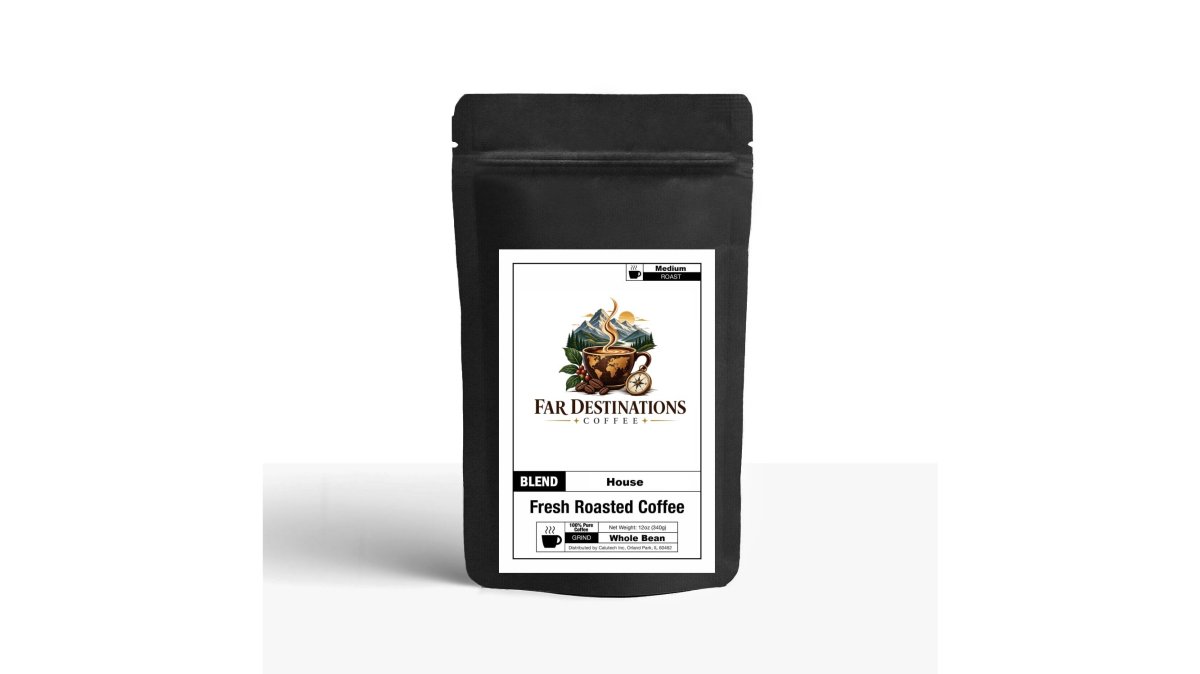
This is the coffee to start with if you're not sure what you like yet. The blend formula smooths out any quirks, so your brewing technique doesn't have to be perfect. Whether your water temperature fluctuates or your grind isn't perfectly uniform, the House Blend absorbs those variables and delivers a recognizable cup every time. It's priced at $22.99 per 12-ounce bag, which is reasonable for specialty coffee.
The environmentally friendly processing, a mix of natural and washed methods, appeals to people who care about farming practices. But the real strength is the flavor consistency. You'll taste the same balanced profile whether you brew it on a Monday morning or a Friday afternoon.
Breakfast Blend: Light and Bright
The Breakfast Blend is a lighter roast designed for early morning. It emphasizes clarity and brightness over body, with tasting notes of walnuts, mild apple, slight raisin, and toffee. South American coffees, washed and sun-dried at high elevations, form the base.
This is the pick if you want to taste the origin flavors more clearly than you would with a darker roast. The lighter roast preserves more of the bean's natural acidity, which translates to a lively, crisp cup. It works well in drip machines because the extended brew time lets those brighter notes develop fully without becoming sharp or sour.
At $22.99, it's the same price as the House Blend.
Gourmet Donut Shop: Medium Strength with Sweetness
The Gourmet Donut Shop is a light-medium roast that splits the difference between the Breakfast Blend's brightness and the House Blend's body. It features cocoa, caramel, toffee, and mild fruits. It's stronger and more indulgent than the Breakfast Blend while staying more nuanced than a dark roast.
Single Origins for Flavor Exploration
The Single Origin Favorites Sample Pack offers six 2-ounce samples: Brazil Santos, Colombia, Costa Rica, Ethiopia, Honduras, and Tanzania. This is the entry point if you want to explore what different regions taste like without committing to a full bag of each.

Troubleshooting Bitter or Sour Drip Coffee
Bitter coffee means over-extraction. The water stayed in contact with the grounds too long, pulling out compounds that taste harsh and astringent. In a drip machine, this usually means your grind is too fine. Water moves through fine grounds slowly, and those extra minutes of contact push the extraction past the sweet spot.
How to Store Coffee Beans for Maximum Freshness
Coffee beans are seeds, and like all seeds, they oxidize when exposed to air. Once roasted, they begin losing flavor immediately. Your job is slowing that oxidation as much as possible.
Frequently Asked Questions
What is the best grind size for a standard drip coffee maker?
Medium-coarse grind is ideal for automatic drip machines. This size allows water to pass through the grounds evenly without over-extracting, which prevents bitter flavors. If your coffee tastes bitter, try a slightly coarser grind; if it tastes sour or weak, try a finer grind. Consistency matters, whole bean coffee ground fresh delivers better flavor and aroma than pre-ground options that lose freshness quickly.
How much coffee should I use per cup in a drip brewer?
Use a 1:16 coffee-to-water ratio as your starting point: 1 gram of coffee per 16 grams of water, or roughly 1 tablespoon of ground coffee per 6 ounces of water. Adjust to taste, if the brew feels weak, increase to 1:15 or 1:14. If it tastes over-extracted or bitter, reduce to 1:17 or 1:18. Most home brewers find their sweet spot within this range, and the ratio remains consistent whether you're brewing 2 cups or 10.
Does roast level affect how coffee tastes in a drip machine?
Yes. Medium roasts preserve more origin flavor and acidity, creating balanced, smooth cups ideal for daily drip brewing. Dark roasts develop bolder, heavier body with chocolate and spice notes. Light roasts highlight fruity and floral notes but can taste thin in some machines. For standard drip brewers, medium roast blends like the House Blend or Breakfast Blend offer consistency and balanced flavor profiles that work well across different water temperatures and brew times.
Is pre-ground coffee okay for drip machines?
Pre-ground coffee works for drip machines but loses freshness and aroma within days of grinding due to oxidation. Whole bean coffee retains flavor and complexity for 2-3 weeks after roasting if stored properly. If you use pre-ground, buy smaller quantities and use within a week. For the best drip coffee experience, grind whole beans immediately before brewing to preserve the full flavor profile and aroma you paid for.
How can I make drip coffee taste better?
Start with quality whole bean coffee in a medium roast, grind just before brewing to a medium-coarse consistency, and use the correct coffee-to-water ratio (1:16). Use filtered water heated between 195-205°F if your machine allows temperature control. Clean your drip machine regularly, mineral buildup and old coffee residue create stale, bitter flavors. Finally, store beans in an airtight container away from heat and light to preserve freshness and flavor complexity.