

Best Light Roast Single Origin Beans: Top Picks
Table of Contents
- What Makes a Light Roast Single Origin Bean Worth Buying
- Quick Comparison: Best Light Roast Single Origin Beans
- Tanzania: Bright Floral Acidity With Strawberry Notes
- Ethiopia Natural: Heirloom Complexity and Fruit-Forward Sweetness
- Uganda: Mild Acidity and Chocolate Depth From High Altitude
- Single Origin Favorites Sample Pack: Try Before You Commit
- Tasting Notes in Light Roast Coffee: What to Look For
- How to Brew Light Roast Coffee Without Losing Its Best Qualities
- Frequently Asked Questions
Last Updated: September 13, 2026
What Makes a Light Roast Single Origin Bean Worth Buying
A light roast single origin bean is a coffee lot grown in one specific place and roasted just past first crack, so the bean's own character reaches the cup instead of being masked by roast.
At Far Destinations Coffee, we source from small farms and roast in small batches for exactly this reason: light roasting leaves nowhere to hide. When it's right, you get bright acidity, floral notes, and a clean finish no blend can match.
Single origin coffee is coffee sourced from one defined growing region, farm, cooperative, or micro-lot, rather than blended from multiple countries.
A bag labeled "single origin" can mean anything from a whole country to a single hillside. The best light roast single origin beans name the region, altitude, variety, and process, because those four details predict what you'll taste.
- Traceability. You can name the farm or cooperative and the region. Vague origin claims are a warning sign.
- A roast profile built for the bean. Light roasting demands precision: too light tastes grassy and underdeveloped, slightly too far loses the florals.
- A roast date, not a best-by date. A best-by date tells you nothing about when the beans were actually roasted.
Most guides treat "light roast" as a flavor, when it's really a set of roaster decisions about how much origin character to preserve. Below, we break down four coffees and how to brew light roast coffee so those flavors survive to your cup.
Quick Comparison: Best Light Roast Single Origin Beans
| Coffee | Roast | Tasting Notes | Process | Price |
|---|---|---|---|---|
| Tanzania | Medium-light | Pear, floral, jasmine, strawberry | Fully washed | $22.99 |
| Ethiopia Natural | Med-light | Milk chocolate, fruity, caramel | Full natural | $22.99 |
| Uganda | Light-medium | Mild acidity, floral, chocolate, dark fruits | Fully washed | $22.99 |
| Single Origin Favorites Sample Pack | Varies | Six origins, 2 oz each | Varies | $24.99 |
Tanzania: Bright Floral Acidity With Strawberry Notes
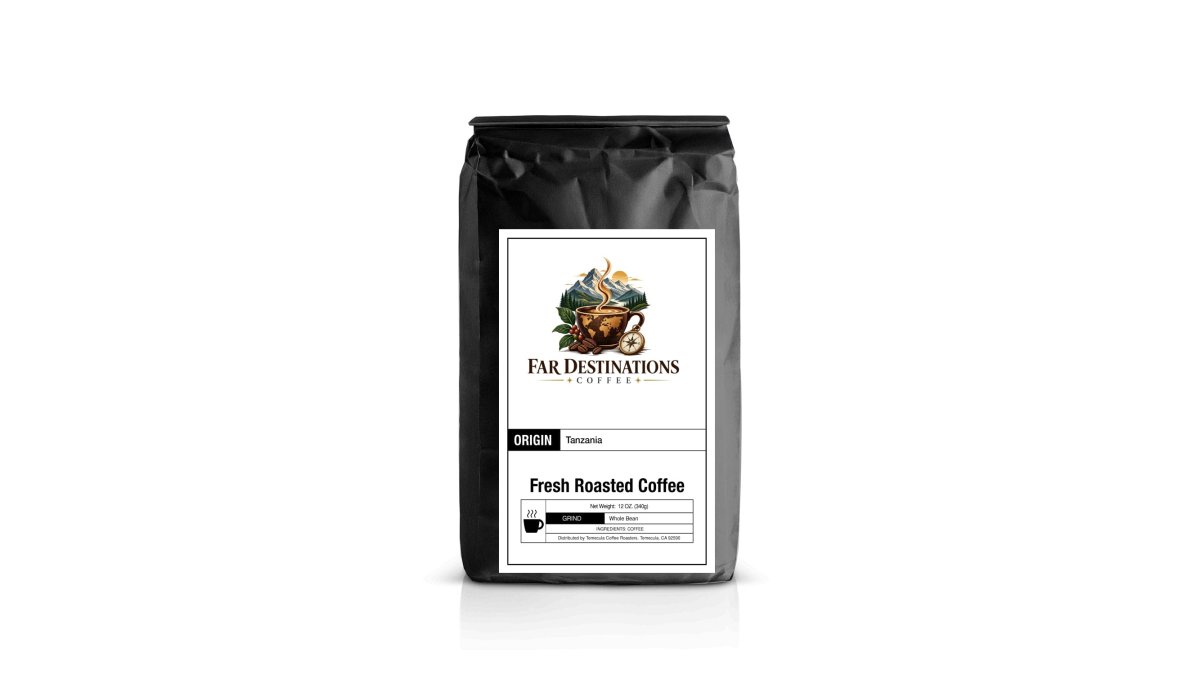
Tanzania is the pick for anyone who wants a light roast that leads with brightness. Grown by small cooperative farmers in the Mbeya region between 1,200 and 1,900 meters, this lot is fully washed and dried on raised beds, producing clarity over heaviness.

The cup opens with pear and jasmine, then lands on a distinct strawberry note most washed coffees never develop. Bourbon and Kent varieties in clay-mineral soil give it a crisp, aromatic structure rather than a syrupy body.
The washed process shapes this cup: removing the fruit before drying leaves the bean's intrinsic acidity and floral character, so Tanzania reads clean and tea-like rather than juicy.
The drawback: this is not a forgiving coffee. Water too cool or a grind too coarse and the strawberry note disappears, leaving a thin, sour cup.
Ethiopia Natural: Heirloom Complexity and Fruit-Forward Sweetness
Ethiopia Natural is the most fruit-forward option here. Smallholder farmers in the Sidama zone grow indigenous heirloom cultivars between 1,700 and 1,900 meters on nitisol soil, then dry the whole cherry in the sun.

Because the fruit stays on the bean during drying, the coffee absorbs sugars from the cherry itself, yielding milk chocolate, caramel, and a layered fruit sweetness washed coffees rarely reach.
Heirloom varieties add complexity: genetically diverse populations, so the cup shifts as it cools, caramel up front, berry in the middle, chocolate on the finish.
Where it falls short: natural coffees are less consistent year to year than washed ones, because drying conditions change with the weather. If you want the most interesting cup, this is it.
Uganda: Mild Acidity and Chocolate Depth From High Altitude
Uganda is the answer for drinkers who find most light roasts too sharp. Grown in the Sipi area of the Kapchorwa District at 1,500 to 2,500 meters, it's a fully washed, sun-dried lot of Bourbon SL14, SL28, and Blue Mountain varieties.

Altitude does the heavy lifting: high-grown coffee develops denser beans that hold more origin character through roasting. In the cup, that's mild acidity, a light body, and a long chocolate and dark-fruit finish rather than the citrus-forward profile people expect.
SL28 and Blue Mountain genetics are known for sweetness and balance, keeping this coffee from tipping into either extreme. Floral aromatics sit on top of a chocolate base.
This is the bag I'd hand someone who says they don't like light roast coffee: light-roast complexity with the comfort of something darker.
Single Origin Favorites Sample Pack: Try Before You Commit
The Sample Pack exists because palate match is the real risk in buying single origin coffee. Six 2 oz packs let you taste across origins before committing to a full bag.
You get Brazil Santos (medium, cocoa), Ethiopia (med-light, milk chocolate and caramel), and Tanzania (medium-light, pear and jasmine).
The range is deliberate: pulped natural from Brazil, natural from Ethiopia, washed from Tanzania. That side-by-side comparison teaches you more about your preferences than any tasting note.
At $24.99, it's the lowest-risk way to find your origin. The tradeoff: 2 oz makes roughly two to three cups per pack, so it's a tasting flight, not a month of coffee.
Tasting Notes in Light Roast Coffee: What to Look For
Tasting notes in light roast coffee describe the flavors a coffee naturally carries, and light roasting preserves more of them than darker roasting does. When you read "pear, floral, jasmine, strawberry" on a bag, you're reading a roaster's best description of what the bean tastes like grown in that soil, at that altitude, processed that way.
Most guides tell you acidity isn't sourness, then never explain how to tell which one you're drinking. That distinction is the single most useful skill in light roast coffee, because it decides whether you change your recipe or your bean.
Bright Acidity vs. Under-Extracted Sourness: A Diagnostic
Both can make you pucker. They are not the same problem, and they do not have the same fix.
Bright acidity is a quality of the bean: a lively, structured sensation, green apple crispness, ripe berry snap, citrus-zest tartness, that sits alongside sweetness and aroma rather than replacing them. As the cup cools, it becomes more pleasant and layered, not harsher.
Under-extracted sourness is a brewing failure: sharp, hollow, unfinished, like biting lemon pith rather than the fruit, often with a salty or papery edge and thin, watery body. As the cup cools, it gets worse, not better.
A practical test: taste at 140-150°F, then again ten minutes later. Sweeter and more complex as it cools means acidity, the bean is fine. Flatter, sharper, and more hollow means you're under-extracting.
What Under-Extraction Actually Means
Under-extraction happens when water pulls too few soluble compounds from the grounds, leaving a cup dominated by early-dissolving acids and missing the sugars and caramelized compounds that dissolve later. Three variables cause it most often:
- Grind too coarse. Water moves through the bed too fast to dissolve the sugars, the most common cause with light roasts, which are denser and resist extraction more than dark roasts.
- Water too cool. Below roughly 195°F, water lacks the energy to pull the later-dissolving compounds. Light roasts generally want 200-205°F.
- Brew time too short. If your pour-over finishes in under about 2:15, the sugars never had time to come out.
What Over-Extraction Tastes Like (The Other Failure)
The opposite problem is just as common once you grind finer. Over-extraction pulls too much, including bitter and astringent compounds: the cup tastes bitter, dry, and hollow, coating your tongue with a drying, tea-tannin sensation. If fixing sourness swings the cup bitter and drying, you've overshot, back off one setting.
Reading a Bag Like a Roaster
Once you can separate these signals, tasting notes become a diagnostic tool rather than marketing copy:
-
"Bright," "juicy," "crisp," "lively" signal high perceived acidity, expect a coffee that rewards a slightly finer grind and hotter water.
-
"Floral," "jasmine," "bergamot" signal delicate aromatics that fade fast. Drink these within a few weeks of the roast date.
-
"Chocolate," "caramel," "brown sugar" signal sweetness that develops later in the extraction, if you taste none of it, you're likely under-extracting.
-
"Berry," "stone fruit," "tropical" signal fruit-forward compounds, most pronounced in natural-process coffees.
-
Body and mouthfeel are separate from flavor. A light roast can be delicate in body and still intensely aromatic.
-
Complexity builds as the cup cools. Most light roasts taste flat at scalding temperatures. Give it two minutes.
-
Write down what you taste. Your notes will be wrong at first. They get better fast, and they're the only way to learn your own palate.
If you want to go deeper, the Specialty Coffee Association's cupping standards and protocols define the vocabulary professionals use, and learning even a few of those terms sharpens your own tasting considerably.
How to Brew Light Roast Coffee Without Losing Its Best Qualities
How to brew light roast coffee comes down to one principle: extract enough to reach the sweetness without scorching the delicate aromatics. Light roasts are denser and less soluble than dark roasts, so they need more work. The variables aren't the hard part, calibrating them to a specific bean is.
Why Light Roasts Need a Different Recipe
Roasting drives off moisture and fractures the bean's cell structure, making dark-roasted coffee easier to extract. A light roast retains more of that structure, so water struggles to reach the soluble compounds inside. That's why a recipe that makes a great dark roast produces a thin, sour cup with a light roast.
The Starting Recipe
- Water temperature: 200-205°F. Light roasts need the top of the range to extract properly.
- Grind: finer than you'd use for a dark roast. Start one setting finer and adjust.
- Ratio: 1:15 to 1:16 coffee to water by weight.
- Bloom: pour twice the coffee's weight in water, wait 30-45 seconds, then continue.
- Total brew time: 2:30 to 3:00 for pour-over.
Grind Size Calibration: The Step Most Guides Skip
Grind matters most with light roasts, and it's the variable most brewers set once and forget. Denser light-roasted beans need a finer grind than the same bean roasted dark, often one to two settings finer on a burr grinder. With a blade grinder, this is where upgrading pays off most: blade grinders produce an uneven mix of dust and boulders that extracts inconsistently.
Calibrate in one direction, one step at a time:
- Brew a cup with your current setting. Taste it at 140-150°F, then again ten minutes later.
- If it's sour, sharp, and thin, and gets worse as it cools, grind one step finer and brew again.
- If it's bitter, drying, and hollow, and coats your tongue, grind one step coarser.
- Stop when the cup is sweet, balanced, and the acidity reads as bright rather than sharp. That's your setting for this bean.
Write the setting down. The next bag from a different origin will likely need its own calibration, because density varies with altitude, variety, and process: a high-grown washed Ethiopian and a lower-grown natural Brazilian won't extract identically at the same grind.
Water Chemistry: The Variable Nobody Talks About
Water makes up roughly 98% of your cup, and its mineral content directly affects how much flavor you extract. guidance from the Specialty Coffee Association on water quality notes that both the total mineral content and the balance of specific minerals matter. Two factors do most of the work:
- Hardness (magnesium and calcium). These minerals bind to coffee compounds and pull them into solution. Too little and the cup tastes flat and underdeveloped; too much and it tastes chalky and dull.
- Alkalinity (bicarbonate). This buffers acidity. High alkalinity mutes the bright, fruity notes that are the whole reason to buy a light roast single origin. Low alkalinity lets that acidity shine.
The practical takeaway: if your tap water is very hard or high in bicarbonate, your delicate light roast will taste muted no matter how well you brew it. Filtered or moderate-mineral bottled water improves results noticeably. Third-wave water recipes give full control, but for most home brewers a simple carbon filter is the highest-return upgrade.
Matching the Brewer to the Bean
Different brewers extract light roasts differently, and matching them to the bean gets you most of the way:
- Pour-over (V60, Chemex, Kalita). Best for delicate, floral, high-acidity coffees like a washed Ethiopian or Tanzanian. The paper filter produces a clean cup that lets those notes through. Requires the most attention to grind and pour technique.
- AeroPress. Forgiving and fast, with good control over extraction. A solid choice if you're still learning to dial in a light roast.
- French press. Full immersion gives you a heavier body, but the metal mesh lets fine particles through, which can muddy delicate florals. Works better with a slightly coarser grind and a longer steep.
- Espresso. The hardest format for light roasts. The density that makes them resist extraction in a pour-over makes them resist it even more under espresso pressure. Expect to grind very fine and to accept that some light roasts simply won't pull well as espresso.
Storage and Freshness
For storage, the National Coffee Association's guidance on storing coffee recommends keeping whole bean coffee in an airtight container away from light, heat, and moisture, and buying only what you'll drink within a few weeks. Freezing works if the bag is sealed and you don't thaw and refreeze repeatedly.
On freshness: buy whole bean and grind right before brewing. Pre-ground light roast loses its aromatic compounds within days, and those florals are the whole reason you bought it. Aim to brew within two to four weeks of the roast date; past six weeks, treat it as a different, flatter coffee.
Frequently Asked Questions
What is the best single origin light roast coffee?
The best light roast single origin depends on your flavor preference. Tanzania offers bright floral and strawberry notes, Ethiopia Natural brings fruit-forward complexity with milk chocolate, and Uganda delivers mild acidity with chocolate and dark fruit. Each is roasted to highlight origin-specific character. A sample pack lets you try all three before committing to a full bag.
How does light roast affect the flavor profile of single origin beans?
Light roasting preserves more of the bean's natural acids and aromatic compounds, so origin-specific flavors like citrus, berry, and floral notes come through clearly. The roast profile stops before caramelization dominates, keeping the cup bright and complex. This makes light roast single origin beans ideal for pour-over and other methods that reward clarity and nuance.
What are the best brewing methods for light roast single origin coffee?
Pour-over and drip methods work best because they allow precise control over water temperature and extraction time. Use water between 195°F and 205°F, a medium-fine grind, and a bloom phase of 30 to 45 seconds. These steps help you brew light roast coffee that highlights its bright acidity without turning sour or thin.
How should I store light roast coffee to maintain freshness?
Store beans in an airtight container away from light, heat, and moisture. A opaque canister in a cool cupboard works well. Avoid the refrigerator because condensation damages the beans. For longer storage, freeze in a vacuum-sealed bag and grind from frozen. Learning how to store coffee beans properly keeps the aromatic compounds intact for weeks after the roast date.
Are light roast beans higher in caffeine than dark roasts?
By weight, light roast beans contain slightly more caffeine because roasting burns off a small amount of mass. However, when measured by volume, dark roast beans are often denser and can deliver similar caffeine. The difference is minor for most home brewers. Focus on the flavor you prefer rather than caffeine content when choosing light roast single origin beans.