

Single Origin vs Blend Coffee Explained
Table of Contents
- Single Origin vs Blend Coffee: The Core Differences
- What Defines a Single Origin Coffee
- What Is a Coffee Blend?
- Flavor Profiles, Consistency, and the Roast Connection
- How to Taste Coffee Notes in Single Origin vs Blend
- Best Brewing Methods for Single Origin Coffee
- Price, Value, and the Environmental Impact of Your Cup
- How to Choose Between Single Origin and Blend
- Frequently Asked Questions
Last Updated: September 11, 2026
Single Origin vs Blend Coffee: The Core Differences
Single origin vs blend coffee explained comes down to one question: do you want a coffee that tastes like one place, or one that tastes the same every time? Single origin coffee comes from one farm, region, or crop, carrying the distinct character of that soil, altitude, and harvest. A blend combines coffees from multiple origins, built deliberately for balance and consistency. At Far Destinations Coffee, we roast both, and neither wins outright, they solve different problems.

This isn't a quality contest: a well-built blend and a well-sourced single origin can both be excellent. The real difference is what you're optimizing for, which changes how you brew, what you pay, and how often the cup surprises you.
What Defines a Single Origin Coffee
Single origin coffee is traced to one specific place, a single farm, cooperative, washing station, or defined growing region. Traceability is the point: you can name the grower, altitude, and processing method because it's never mixed with anything else.
That specificity is why origins taste so different. A washed Ethiopian coffee from the Sidama zone, like the one in our Single Origin Favorites Sample Pack, tends toward milk chocolate, fruit, and caramel. A Ugandan coffee from the Sipi area of Kapchorwa shows mild acidity, light body, floral notes, and dark fruit. Same species, completely different cup.
The trade-off: single origin coffee changes with each harvest. That's the appeal and the frustration.
What Is a Coffee Blend?
A coffee blend is two or more coffees from different origins combined, usually before or during roasting, to create a specific, repeatable flavor profile. The roaster decides the recipe; the goal is a cup that tastes the same in March as in October.
Blends exist partly out of necessity. Crops vary year to year, so a roaster who wants a dependable house coffee adjusts the recipe as new harvests arrive. They also exist for craft: blending a bright, high-acid coffee with a heavier, low-acid one produces balance neither could reach alone.
Our House Blend is a good example. It combines Central and South American coffees, both natural and washed processed, into a medium roast with nutty, sweet chocolate, and mild citrus notes. The point isn't to showcase one farm. It's to deliver the same clean, bright finish every time you open the bag.
Flavor Profiles, Consistency, and the Roast Connection
Flavor profiles differ in kind, not degree. Single origin coffee shows nuance: the terroir of a hillside, natural versus washed process, how altitude shifts acidity and sweetness. Blends show balance and uniformity, because someone engineered them to.
Consistency is where blends have a structural advantage. A single farm's output shifts with rainfall, harvest timing, and processing decisions. A blend recipe absorbs those shifts.
How Roast Level Shapes Acidity, Body, and Sweetness
Roast level is the variable most drinkers underestimate. A coffee roast profile, the curve of time and temperature applied to green beans, changes the cup as much as origin does.
- Light roasts preserve origin character: higher acidity, more floral and fruit notes, lighter body
- Medium roasts balance acidity and sweetness, which is why so many single origins land here
- Dark roasts push sweetness toward caramel and chocolate, cut acidity, and add body, often at the cost of origin distinctiveness
A dark roast blend and a dark roast single origin taste more alike than either does to its own light-roasted counterpart. Roast can flatten the very differences you're paying for.
How to Taste Coffee Notes in Single Origin vs Blend
Learning how to taste coffee notes starts with two habits: taste side by side, and write down what you notice before reading the bag.
Cupping is the industry's standard method, and a simplified home version works: grind both coffees coarse, pour hot water over each in separate cups, steep, then break the crust with a spoon and smell. Slurp so the coffee spreads across your palate, and wait for the aftertaste before deciding.
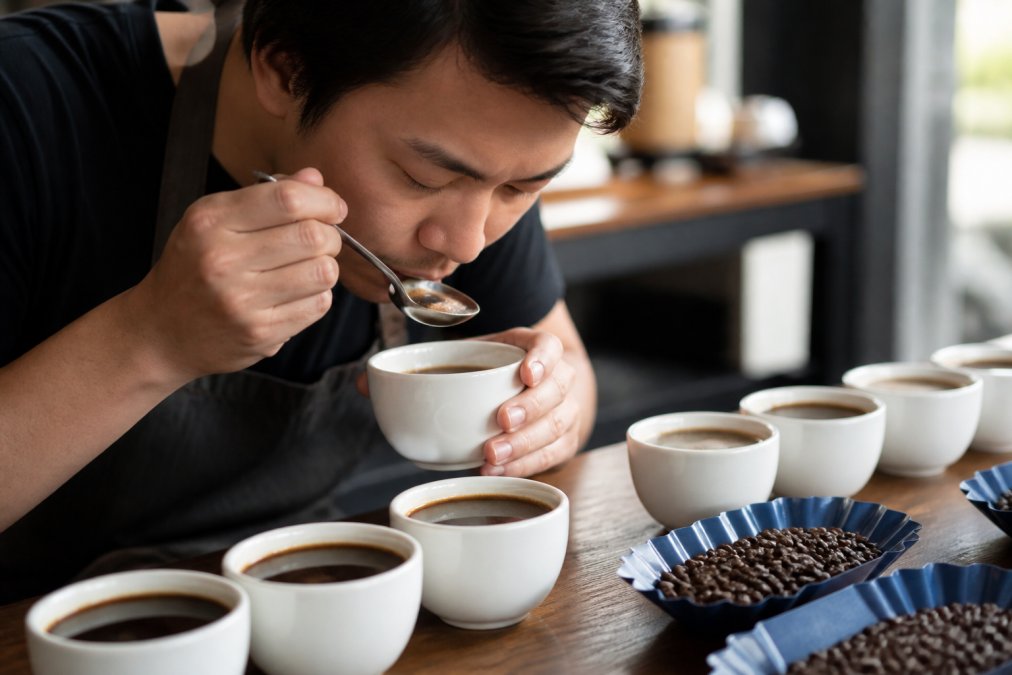
A few sensory training exercises worth repeating:
- Taste the same coffee at three different temperatures and note what changes
- Compare a washed and a natural process coffee from the same country
- Keep a simple log: sweetness, acidity, body, mouthfeel, aftertaste
Where blends tend to win: the flavors arrive together and stay put. Where single origins win: you can follow a note as it shifts from the front of your palate to the finish.
Best Brewing Methods for Single Origin Coffee
The best brewing methods for single origin coffee let you control extraction, because delicate origin character is easy to bury. Pour-over, AeroPress, and siphon reward attention; a basic drip machine works if you adjust grind and ratio rather than accepting the factory setting.
Two numbers do most of the work:
- Water-to-coffee ratio: start around 1:16 by weight, then tighten toward 1:15 if the cup tastes thin
- Grind size: finer increases extraction and body, coarser reduces both
If a single origin tastes sharp and hollow, it's usually under-extracted. Go finer or slow the pour. If it tastes bitter and flat, it's over-extracted. Go coarser or shorten the contact time.
Blends are more forgiving: built-in balance means small errors cost less, making them the safer choice for a rushed weekday morning.
Price, Value, and the Environmental Impact of Your Cup
Single origin coffee usually costs more per bag than a comparable blend, for structural reasons. Micro-lots come in small volumes, often require hand sorting, and carry traceability costs that scale poorly. Blends let a roaster buy larger lots and absorb a weak harvest without changing the recipe.
Value depends on what you're buying it for. For a daily routine, a consistent blend at a steady price is straightforward value. To explore what a specific region tastes like this year, the single origin premium buys something a blend can't.
Where the Price Difference Actually Comes From
Four cost drivers separate a single-origin micro-lot from a blend at the same roast level:
- Lot size. A single-farm micro-lot might be a few hundred pounds of green coffee; a blend pulls from lots measured in thousands of pounds, spreading fixed costs like shipping, storage, and quality control across more bags.
- Sorting and defect removal. Micro-lots are often hand-sorted to protect the flavor profile the grower is paid for. Blends absorb minor defects across components without the cup falling apart.
- Traceability overhead. Naming the farm, altitude, varietal, and processing method requires record-keeping at every step, real labor that lands in the price.
- Harvest volatility. A single farm's output swings with rainfall and timing; a blend recipe can swap one component for another and keep the cup stable, smoothing supply risk.
The gap narrows as roast volume rises: a roaster buying a full container of single origin can price it closer to a blend than one buying a 10-bag micro-lot.
Environmental Impact: A Comparison, Not a Verdict
The environmental comparison between single origin and blends is less clear-cut than marketing suggests, breaking into three categories.
Shipping and consolidation. Single-origin micro-lots often ship in smaller quantities, sometimes air-freighted for freshness, raising the carbon cost per pound (the EPA). Blends consolidate larger volumes into fewer shipments, lowering emissions per pound. This is where blends usually win.
Processing water and waste. Washed processing uses significant water to remove mucilage; natural uses almost none but needs more drying space and carries higher defect risk (peer-reviewed research). Honey sits between. This tracks processing method, not origin or blend, a washed single origin and a washed blend component carry the same water profile.
Farm-level practices. Single origin offers traceability: you can often identify the farm and its shade, water, and waste practices. Blends can support sustainability at scale, since roasters can commit to cooperatives over multiple seasons and fund infrastructure a one-off micro-lot purchase wouldn't.
Neither category is automatically greener. What actually reduces your footprint: buying whole bean, brewing at home, and not wasting what you buy.
Reading a Bag for Value Signals
A few label details reveal whether you're paying for traceability or packaging:
- Harvest year. A single origin with a stated harvest year is fresher and more traceable than one without.
- Farm or cooperative name. Named sources justify a premium; vague regional labels often don't.
- Roast date, not best-by date. Freshness drives flavor more than origin for most drinkers.
- Component list on a blend. A blend that names its components is usually built with more care than one that doesn't.
How to Choose Between Single Origin and Blend
Choose a blend for the same cup every morning, a basic brewing setup, or a household with mixed preferences. Choose single origin to taste a specific place, if you're willing to adjust your brewing and accept that the next harvest may taste different. There's no wrong answer, only a mismatched one.
Here's the decision in table form:
| Your Priority | Choose | Why | Try |
|---|---|---|---|
| Same taste every day | Blend | Recipe absorbs harvest variation | House Blend |
| Exploring one region | Single origin | Traceable farm, altitude, process | Uganda |
| Basic drip machine | Blend | Forgiving of grind and ratio errors | 12 Pack Single Serve Capsules |
| Dark, heavy cup | Blend | Dark roast builds body and cuts acidity | Italian Roast |
| Learning to taste | Single origin | Distinct notes are easier to isolate | Single Origin Favorites Sample Pack |
A common mistake is brewing single origin beans exactly like the blend you're used to. Expect to dial in the grind again.


Brewing Parameter Adjustments for Each Type
Here's what "adjust your grind" actually means when switching between a blend and a single origin.
When moving from a blend to a single origin:
- Grind finer by one or two clicks on a stepped grinder, or a small nudge on a stepless one. Single origins often extract more slowly because denser, higher-grown beans resist water.
- Raise water temperature slightly, toward the upper end of the range for the roast level. A light-roast single origin at 200-205°F opens up florals and fruit a cooler brew leaves buried (sca.coffee).
- Tighten the ratio toward 1:15 if the cup tastes thin. Delicate coffees can read as hollow at 1:17 even when extraction is technically correct.
- Slow the pour on pour-over. Longer contact time coaxes out origin character a fast pour skips past.
When moving from a single origin to a blend:
- Grind coarser if the blend tastes bitter or muddy. Blends extract evenly, so over-extraction shows up fast.
- Drop water temperature a few degrees for dark-roast blends. Dark roasts are more soluble and can turn ashy at high heat.
- Loosen the ratio toward 1:16 or 1:17. Blends have enough body to stay balanced at a thinner ratio.
A Simple At-Home Tasting Exercise
You don't need a cupping table to train your palate. Try this with a blend and a single origin side by side:
- Brew both the same way. Same grind, same ratio, same water temperature. This isolates origin as the variable.
- Taste at three temperatures. Hot, warm, and room temperature. Single origins often shift noticeably as they cool; blends tend to hold their profile.
- Write four notes per cup. Sweetness, acidity, body, and finish. Don't read the bag first.
- Compare the finish. Blends usually land and stay. Single origins often evolve from the front of the palate to the back.
- Repeat with the same coffees a week later. Consistency is the blend's whole pitch, see if it holds.
Most practitioners find three or four rounds of this exercise is enough to start predicting which type they'll prefer before they brew.
The Third-Wave Reframe
The old knock on blends was that they hid defects behind dark roasting. That stigma is mostly outdated. In today's craft market, blends are often curated deliberately, a roaster pairs a bright washed component with a heavier natural one to hit a target flavor, the way a chef builds a dish. Single origin isn't automatically higher quality, and a blend isn't automatically a compromise. The question is whether the roaster built the coffee on purpose.
Frequently Asked Questions
Is single origin coffee better than a blend?
Neither is objectively better; they serve different purposes. Single origin highlights the distinct terroir, varietal, and processing method of one region, giving you nuance and traceability. Blends combine beans to create a consistent, balanced flavor profile that works across brewing methods. If you enjoy exploring seasonal differences and subtle notes, single origin is rewarding. If you want the same great cup every morning, a blend like Far Destinations House Blend delivers that reliability.
Why is single origin coffee more expensive than blends?
Single origin coffees often cost more because they come from specific micro-lots or small farms with limited harvest cycles. Traceability, higher altitude growing conditions, and careful processing methods like washed or natural add to production costs. Blends can use beans from multiple regions and harvests, which stabilizes supply and lowers the average price per pound. Far Destinations Single Origin Favorites Sample Pack at $24.99 lets you try six origins without committing to a full bag.
How does roasting affect the flavor of single origin vs blends?
Roast level determines how much of the bean's origin character survives. Light and medium roasts preserve acidity, floral notes, and fruit-forward flavors typical of single origin coffees. Darker roasts introduce caramelization and smokiness that can mask subtle terroir but add body and sweetness to blends. A roast profile is the roaster's plan for time and temperature. For single origin, lighter roasts let you taste the region; for blends, medium to dark roasts build consistency.
Can I brew single origin coffee in a basic drip machine?
Yes. A standard drip machine works fine for single origin coffee, though you may lose some nuance compared to pour-over or French press. Use a medium grind, a water-to-coffee ratio around 1:16, and make sure your machine reaches the right temperature. Single origin beans from Far Destinations, like the Uganda with floral and dark fruit notes, will still taste noticeably different from a grocery store blend even in a drip brewer. Freshness matters more than equipment.