

How to Brew Better Coffee at Home: 2026 Guide
Table of Contents
- Why Your Coffee Tastes Off (and How to Fix It)
- Start with Fresh Beans and the Right Grind Size Chart
- Master the Coffee to Water Ratio
- Find the Best Water Temperature for Coffee
- Step-by-Step: How to Brew Better Coffee with a Pour-Over
- Troubleshoot Your Flavor: Sour, Bitter, or Weak
- How to Brew Better Coffee with Your Drip Machine
- Your Next Cup Starts with the Right Gear
- Frequently Asked Questions
Last Updated: September 9, 2026
Why Your Coffee Tastes Off (and How to Fix It)
If your morning cup tastes bitter, sour, or weak, the problem is rarely the beans. Most failures trace back to stale coffee, inconsistent grind size, the wrong coffee to water ratio, or water that is too hot or too cold. Understanding how to brew better coffee at home means controlling these factors rather than guessing.
You do not need expensive equipment to improve dramatically. A digital scale, a decent burr grinder, and fresh beans solve most issues overnight. At Far Destinations Coffee, we roast in small batches and ship quickly after the roasted-on date, the single biggest advantage a home brewer can have. Stale coffee loses the volatile oils that carry flavor, so freshness is the foundation.
Start with Fresh Beans and the Right Grind Size Chart
Fresh beans are the starting point, but grind size is where most people lose the plot. The grind determines surface area the water touches, directly controlling extraction. Too coarse yields weak, sour coffee; too fine yields bitter, over-extracted coffee.
A coffee grind size chart is your roadmap. For a pour-over, aim for a medium-fine consistency, similar to table salt. For a French press, use a coarse grind, like breadcrumbs. Espresso requires a very fine, powdery grind. The easiest way to dial this in is to buy a burr grinder, which produces uniform particles. Blade grinders chop unevenly, leaving both dust and boulders that extract at different rates.
| Brew Method | Grind Size | Texture Reference | Brew Time |
|---|---|---|---|
| French Press | Coarse | Breadcrumbs | 4 minutes |
| Pour-Over | Medium-Fine | Table salt | 2.5-3 minutes |
| Drip Machine | Medium | Sand | 4-6 minutes |
| Espresso | Fine | Powdered sugar | 25-30 seconds |
The roasted-on date matters more than the "best by" date. Coffee beans need a few days to degas after roasting, but they peak between four days and three weeks. After that, the flavors flatten noticeably.
Master the Coffee to Water Ratio
The coffee to water ratio is the most neglected variable in home brewing, and fixing it transforms your cup instantly. The industry standard, recommended by the Specialty Coffee Association brewing guidelines, is 1:16, meaning one gram of coffee for every 16 grams of water. That translates to roughly 60 grams of coffee per liter of water.
Many beginners use too little coffee, producing a weak, hollow brew. A standard scoop holds about 10 grams, but density varies by roast level. A scale removes the guesswork.
Find the Best Water Temperature for Coffee
The best water temperature for coffee sits between 195°F and 205°F (peer-reviewed research). A rolling boil at 212°F scorches grounds and amplifies bitterness; water below 190°F under-extracts, leaving sour, flat coffee.

If you do not own a temperature-controlled kettle, bring water to a boil and let it rest for 30 to 45 seconds before pouring. That pause drops the temperature into the ideal range. Water quality also matters. Coffee is roughly 98% water, so heavily chlorinated or mineral-heavy tap water will mask delicate flavors. Research on water chemistry and coffee extraction shows that the mineral content of water significantly affects how well flavors are pulled from the grounds. Filtered water is a simple fix that most brewers overlook.
Step-by-Step: How to Brew Better Coffee with a Pour-Over
The pour-over method offers the most control over your brew, making it the gold standard for learning how to brew better coffee at home. It forces attention on grind, ratio, temperature, and time. Master it, and every other method becomes easier.
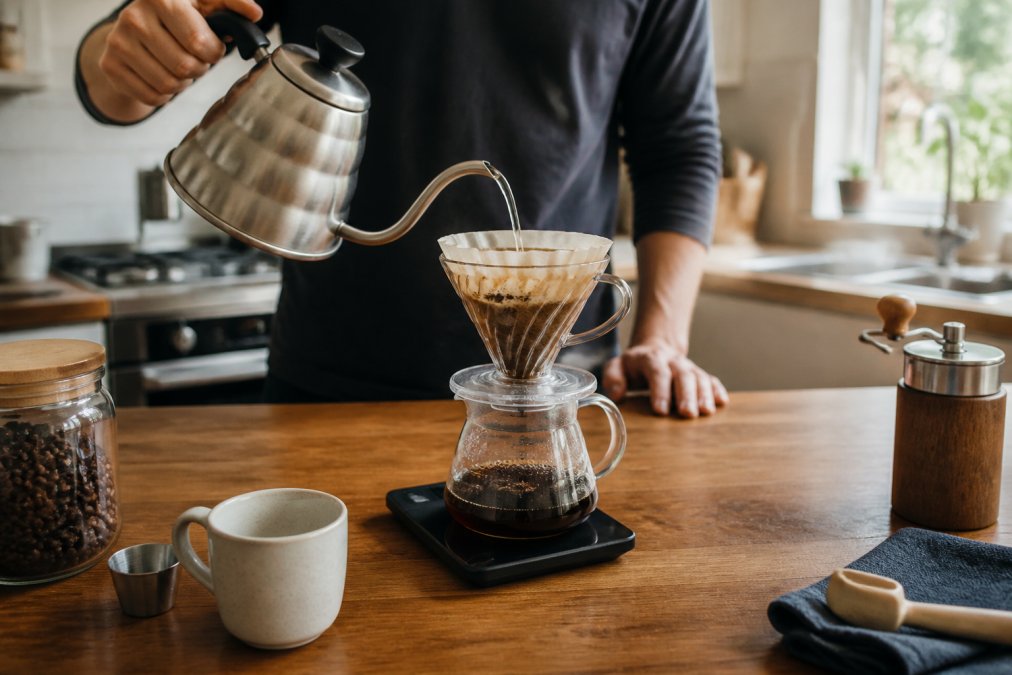
Step 1: Measure and Grind
Weigh out 30 grams of whole beans and grind to a medium-fine consistency. Rinse a paper filter with hot water to remove papery taste and warm the brewer. Discard the rinse water, add grounds, and shake gently to level the bed.
Step 2: Bloom and Pour
Start your timer and pour twice the coffee's weight (about 60 grams) in a slow spiral. This bloom phase lets trapped carbon dioxide escape; wait 30 to 45 seconds. Continue pouring in slow, concentric circles until you reach 480 grams total. Total brew time should land between 2.5 and 3 minutes.
Troubleshoot Your Flavor: Sour, Bitter, or Weak
Tasting your coffee critically is the fastest way to improve, but fixing flavor issues requires understanding the chemistry. Sourness and bitterness are opposite ends of the same extraction spectrum.
The Extraction Yield Framework
Specialty coffee professionals use two metrics: Total Dissolved Solids (TDS), the percentage of your cup that is coffee material, and extraction yield, the percentage of the bean's mass that ends up in your cup. The Specialty Coffee Association's golden cup standard targets a TDS between 1.15% and 1.35%, with an extraction yield between 18% and 22%.
You do not need a refractometer at home to benefit. Understanding it tells you why your coffee tastes the way it does:
- Under-extraction (below 18% yield): The water has pulled only the bright, acidic compounds from the bean, leaving behind the sugars and complex flavors. The result is sour, sharp, or salty coffee. This happens when your grind is too coarse, your water is too cool, or your brew time is too short.
- Over-extraction (above 22% yield): The water has pulled everything, including the bitter, astringent compounds that dissolve last. The result is dry, bitter, or hollow coffee. This happens when your grind is too fine, your water is too hot, or your contact time is too long.
- Balanced extraction (18-22% yield): The cup is sweet, complex, and round, with no single flavor dominating.
A Diagnostic Approach to Flavor Problems
When your coffee tastes wrong, do not guess. Isolate the variable:
- Check your ratio first. If you used less than 1:15 coffee to water, the brew will taste weak regardless of extraction quality. Fix the dose before touching the grind.
- Assess the mouthfeel. Thin, tea-like body suggests under-extraction or too coarse a grind. Heavy, syrupy body with bitterness suggests over-extraction.
- Evaluate the finish. A sour finish that lingers on the sides of your tongue indicates under-extraction. A dry, puckering finish at the back of your throat indicates over-extraction.
- Adjust one variable. Change grind size first, since it has the largest impact on extraction rate. If the coffee is sour, go finer by two or three clicks on your burr grinder. If bitter, go coarser. Brew again before changing anything else.
| Flavor Profile | Likely Extraction State | Primary Fix | Secondary Fix |
|---|---|---|---|
| Sour, sharp, salty | Under-extraction | Grind finer | Increase water temperature toward 205°F |
| Bitter, dry, astringent | Over-extraction | Grind coarser | Shorten brew time by 15-30 seconds |
| Weak, thin, hollow | Low TDS from under-dosing | Increase coffee dose | Verify water temperature is above 195°F |
| Flat, dull, lifeless | Stale beans or water too cool | Use beans roasted within 3 weeks | Heat water to 200°F |
| Metallic or ash-like | Over-extraction from uneven grind | Upgrade to a burr grinder | Use a paper filter to catch fines |
The Role of Roast Level in Extraction
Roast level changes extraction ease. Dark roasts are more porous and extract faster, forgiving cooler water and coarser grinds. Light roasts are denser and extract slower, requiring hotter water and a finer grind. Switching from dark to light without adjustment will likely taste sour; grind finer by two to three clicks.
This framework transforms troubleshooting from guesswork into a repeatable process. Identify whether your coffee is under- or over-extracted, and you can fix any brew in one or two adjustments.
How to Brew Better Coffee with Your Drip Machine
You do not need a pour-over setup to brew better coffee at home. A standard drip machine works well if treated with respect. Start with fresh, properly ground coffee and the correct ratio. Most drip machine scoops rarely align with a 1:16 ratio, so measure by weight.
The biggest upgrade for a drip machine is water temperature. Many budget machines do not heat water hot enough, producing under-extracted coffee. Use the "strong" or "bold" setting if available, as it slows water flow and increases contact time. Clean your machine monthly; built-up scale and old oils ruin even the best beans.
Your Next Cup Starts with the Right Gear
Technique matters most, but the right equipment removes friction. You do not need a commercial setup, but three pieces of gear will dramatically improve your brew: a burr grinder, a digital scale, and a gooseneck kettle.
The Burr Grinder: Your Most Important Purchase
Grind consistency is the single largest equipment factor in coffee quality. Blade grinders chop randomly, producing fine dust that over-extracts and turns bitter alongside coarse chunks that under-extract and stay sour. Burr grinders crush beans between two abrasive surfaces to a uniform size.
Entry-level hand grinders like the Hario Skerton or Timemore C2 produce consistent grounds for pour-over and French press. Electric burr grinders from Baratza or Fellow offer faster grinding and more precise adjustment. Look for at least 30 distinct grind settings; stepless grinders cost more. For espresso, fine adjustment is essential, as a two-click change can mean the difference between a 25-second and a 40-second shot.
The Digital Scale: Precision Under $20
Volume measurements are unreliable: fine grounds pack tighter than coarse, and roast level changes density. A $15 digital scale with 0.1-gram resolution eliminates this variability. Choose one with a built-in timer, place your brewer directly on it, and tare between additions.
The Gooseneck Kettle: Control the Pour
A gooseneck kettle's narrow spout gives precise control over water flow. A fast pour agitates grounds and speeds extraction; a slow pour reduces agitation. Controlled spirals ensure even saturation. Electric models from Fellow or Bonavita hold target temperature, eliminating guesswork. A stovetop gooseneck kettle with an instant-read thermometer works nearly as well for less.
What to Skip
You do not need a $100 scale, titanium burrs, or a brewer with built-in scales and timers. These add convenience, not flavor. Invest first in beans, then the grinder, then the scale, then the kettle. A pour-over dripper, French press, or standard drip machine you already own is sufficient.
Choosing Beans That Fit Your Gear
If you are brewing with a blade grinder or basic drip machine, choose a medium or dark roast; these are more forgiving of inconsistent extraction. Light roasts require precise grind control and hotter water, so save them for after you upgrade your grinder. At Far Destinations Coffee, we roast in small batches and ship within days of the roasted-on date, so you are working with beans at their peak flavor window between four days and three weeks after roasting. Pair those beans with a burr grinder, a scale, and a gooseneck kettle, and you have everything you need to brew better coffee at home.
Frequently Asked Questions
What is the most effective way to brew better coffee at home?
The most effective method is the pour-over, because it gives you total control over water temperature, flow rate, and saturation. Pair it with a burr grinder and a digital scale. Start with a 1:16 coffee to water ratio and adjust from there. This setup lets you isolate variables when your cup tastes off, making it easier to brew better coffee consistently.
Why is a burr grinder better than a blade grinder for coffee?
A blade grinder chops beans into uneven pieces, from dust to chunks. Those smaller particles over-extract and taste bitter, while larger ones under-extract and taste sour. A burr grinder crushes beans between two surfaces to produce a uniform grind size. Consistent grounds extract at the same rate, which is the simplest path to a balanced, sweeter cup.
Does water temperature affect coffee flavor?
Yes, directly. Water that is too hot, above 205°F, over-extracts the grounds and creates bitterness. Cooler water, below 195°F, under-extracts and leaves you with sour, weak coffee. The best water temperature for coffee is between 195°F and 205°F. If you do not have a kettle with temperature control, let boiling water rest for 30 to 45 seconds before pouring.
My coffee tastes bitter no matter what beans I buy. What am I doing wrong?
Bitterness usually comes from over-extraction, not the beans. Check three things: your grind is likely too fine, your water is too hot, or your brew time is too long. Coarsen your grind slightly, use water below 205°F, and shorten your total brew time. If you use a drip machine, make sure it heats water to the proper range and does not let coffee sit on the hot plate too long.
Brewing better coffee at home is not about chasing perfection. It is about removing the guesswork from your daily ritual. Start with fresh beans from Far Destinations Coffee, dial in your grind and ratio, and control your water temperature. Those four changes will produce a cup that rivals your local café. Explore our single-origin selection and find the profile that suits your palate, then put these techniques to work tomorrow morning.