

What Makes Specialty Coffee Different: A 2026 Guide
Table of Contents
- Specialty Coffee vs Commercial Coffee: The 80-Point Divide
- SCA Coffee Grading Standards: How Beans Get Scored
- Terroir, Altitude, and Why Arabica Beans Dominate
- Processing Methods: Washed, Natural, and Honey
- How to Brew Specialty Coffee at Home (Without Fancy Gear)
- Storage and Freshness: Why the Clock Starts at Roast
- Does Specialty Coffee Always Taste Better? What to Expect
- Frequently Asked Questions
Last Updated: September 14, 2026
Specialty Coffee vs Commercial Coffee: The 80-Point Divide
Specialty coffee scores 80 or higher on the Specialty Coffee Association's 100-point scale, separating it from the commodity beans on most grocery shelves. This guide from Far Destinations Coffee covers what that score measures, why altitude and processing matter, and how to brew and store these beans. The gap between the two categories starts long before roasting.
What Commercial Coffee Actually Is
Commercial coffee is defined by volume, not quality: grown for maximum yield, harvested in bulk with underripe and overripe cherries mixed in, and roasted dark enough to mask defects. That's why commodity coffee tastes burnt and bitter rather than distinct. Blending across regions smooths out inconsistency but flattens flavor identity, the goal is a predictable, shelf-stable product, not a memorable one.
Where Specialty Coffee Begins
Specialty coffee begins with a hard cutoff: 80 points or above. Below that line, coffee is graded commercial regardless of marketing; above it, the bean earns its place through measurable quality, not branding, zero primary defects, tightly controlled harvesting, and a flavor profile that holds up under professional sensory analysis. It's the definition most packaging avoids stating outright.
SCA Coffee Grading Standards: How Beans Get Scored
The SCA coffee grading standards use a standardized cupping protocol where licensed graders evaluate a sample across ten categories, including fragrance, flavor, acidity, body, balance, and sweetness. Defects subtract points; clean, expressive cups add them. Scores of 80 to 84.99 are "very good," 85 to 89.99 "excellent," and 90-plus "outstanding", one shared language for buyers, roasters, and farmers.
Specialty Coffee Association cupping protocols and grading standards
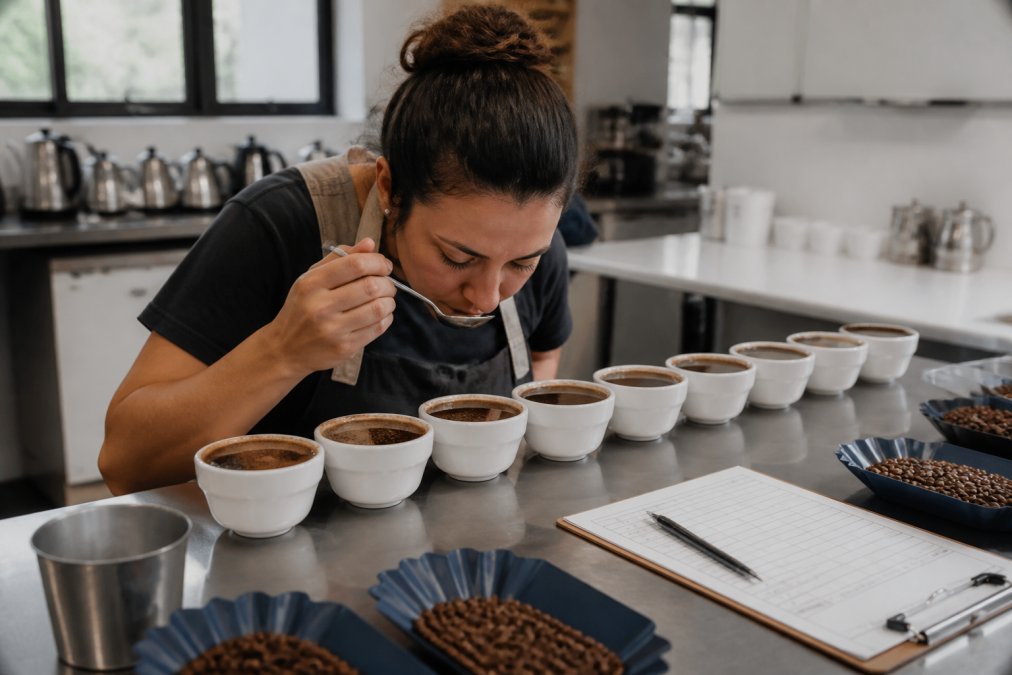
The Cupping Table and Sensory Analysis
On the cupping table, hot water is poured over freshly ground samples, and the grader breaks the crust with a spoon, inhaling the aromatics before tasting. Slurping spreads the coffee across the palate to assess acidity, body, and sweetness at once. This analysis is calibrated, not personal preference, graders are tested against reference samples to keep scoring consistent across labs and continents.
The protocol is standardized: fixed coffee-to-water ratio, water temperature, grind, and rest time before evaluation. That rigidity is the point, a score of 86 means roughly the same thing whether the sample was cupped in a Portland warehouse or a Nairobi export office. Without it, the 80-point line would be meaningless.
What a Q-Grader Looks For
A Q-grader is a licensed professional who has passed a rigorous exam covering sensory skills, defect identification, and cupping calibration. They look for balance first, no single attribute should dominate, then cleanliness (no off-ferment, phenol, or mold notes), a defined acidity, and a finish that lingers pleasantly. Newcomers often assume "strong" equals "good"; intensity without balance scores lower, not higher.
Inside the Q-Grader Certification
The certification itself is worth understanding, because it keeps the 80-point threshold from being arbitrary.
The Q-Grader program is administered through the Coffee Quality Institute, the nonprofit that maintains the credential. Candidates complete modules, general knowledge, sensory skills, olfactory skills, and cupping, before the practical exams, which are pass/fail and notoriously unforgiving. Misidentify a defect or an intensity level and you fail the module and retest.
The hardest part is calibration: graders must score the same sample within a narrow tolerance of a reference panel. If your 7 for acidity is the room's 6, you're out of calibration and the score doesn't count. That's why Q-Graders recertify on a cycle, palates drift, and the credential must be re-earned against a live reference.
So when a roaster advertises an 86-point coffee, that number came from someone who passed a standardized exam and is periodically re-tested against other calibrated graders. It's not a marketing score, it's a measurement with a chain of custody.
Why the Score Isn't the Whole Story
A high score means the coffee was clean, balanced, and defect-free when cupped. It says nothing about roast quality, age, or how it will taste in your kitchen, a 90-point green coffee roasted poorly can land closer to an 80 in the cup. The score is a starting point, not a finish line.
Terroir, Altitude, and Why Arabica Beans Dominate
Arabica beans dominate specialty coffee because they carry more sugars and aromatic compounds than Robusta and thrive at high altitude, where slower cherry development concentrates flavor. Terroir, soil, climate, and elevation combined, is why a Kenyan coffee tastes bright and citrusy while a Brazilian leans toward cocoa and nuts. Beans grown above roughly 1,200 meters ripen slowly, building density and complexity lowland coffee can't match. Robusta still earns a place in espresso blends for crema and caffeine, but rarely clears the specialty bar alone.
Processing Methods: Washed, Natural, and Honey
Processing determines how much fruit character survives into the cup. Washed strips the fruit before drying for a clean, acidic, terroir-forward profile. Natural dries the cherry whole around the bean, pushing heavy fruit and fermented sweetness into the flavor. Honey sits between the two, leaving some mucilage attached for a rounder body and muted acidity. None is objectively better, the same green coffee can taste like two different drinks depending on the producer's choice.
How to Brew Specialty Coffee at Home (Without Fancy Gear)
You can brew specialty coffee at home with a basic drip machine and still taste the difference if you get three variables right: grind size, water temperature, and ratio. Most home brewers grind too fine and brew too cool, which is why their results taste thin or bitter.
- Grind fresh, and match the grind to the method. Medium for drip, coarse for French press, medium-fine for pour-over.
- Use water between 195°F and 205°F. Below that range, you under-extract and lose sweetness.
- Start at a 1:16 ratio (one gram of coffee to sixteen grams of water) and adjust from there.
- Skip the pre-ground bags. Once ground, coffee loses its aromatics within days.
A $20 burr grinder will improve your cup more than a $200 machine. That's the insider tip most gear guides bury.
Why Equipment Matters More Than the Bean
Specialty coffee is a set of flavor compounds that only show up if you extract them correctly. A blade grinder produces uneven particles, some dust, some boulders. The dust over-extracts and turns bitter; the boulders under-extract and taste sour, burying the floral and fruit notes that justify the price premium.
A burr grinder crushes beans between two abrasive surfaces at a consistent gap, producing uniform particles that extract at the same rate, so the cup tastes like one coffee instead of a blend of mistakes. It's the highest-leverage upgrade in home brewing, and it costs less than a month of café drinks.
A digital scale is the second. Volume scoops are unreliable because coffee density varies by roast level and origin. Weighing beans and water removes a variable you can't otherwise control. A basic 0.1-gram scale runs under $20.
The Extraction Mechanics Behind the Taste
Hot water dissolves coffee compounds in a predictable order: acids and fruit-forward notes first, then sugars and caramelized compounds, then bitter, dry tannins. The goal is to stop in the sweet spot, after the sugars, before the tannins.
Three variables control where you stop:
- Grind size sets the surface area. Finer grind, faster extraction.
- Water temperature sets the energy. Hotter water, faster extraction.
- Time sets the window. Longer contact, more extraction.
Change one and you shift the balance. This is why the same beans can taste sour one morning and bitter the next, you moved a variable without realizing it.
What You Actually Need (and What You Don't)
You don't need a $3,000 espresso machine to taste what specialty coffee offers. A pour-over cone, French press, or decent drip brewer does the job if grind and ratio are right.
What you do need:
- A burr grinder (hand-crank models start around $40 and outperform any blade grinder)
- A digital scale (under $20)
- A thermometer or a kettle with temperature control (optional if your brewer holds temp)
- Fresh beans with a roast date (the one input you can't fix downstream)
What you don't need: every gadget on the market, a refractometer, or a $200 gooseneck kettle before you've dialed in your grind. Those tools help once the fundamentals are solid, they don't substitute for them.
The Trade-Off Nobody Mentions
Specialty coffee is less forgiving than commercial coffee. Commercial beans are roasted dark and blended for consistency, so they taste roughly the same across a wide range of brewing mistakes. Specialty beans are roasted to preserve origin character, making them more sensitive to grind, temperature, and time.
That sensitivity is the trade-off: more flavor range, earned with a little attention. The learning curve is short, most people dial in a repeatable recipe within a week of weighing their coffee instead of scooping it.
Storage and Freshness: Why the Clock Starts at Roast
The clock starts at roast, not purchase, which is why "roasted on" dates matter more than "best by" dates. Whole beans peak for roughly two to four weeks after roasting, then decline. Oxygen, light, heat, and moisture are the enemies; the compounds behind delicate floral and fruit notes oxidize first, which is why an old bag tastes flat even if it isn't technically stale.
- Store beans in an opaque, airtight container at room temperature
- Keep them away from the stove, the window, and the fridge
- Buy in quantities you'll finish within a month
- Grind immediately before brewing, every time
The freezer works for long-term storage if you seal beans airtight and don't thaw and refreeze repeatedly. The fridge does not work; it exposes beans to moisture and odors from everything else in there.
Does Specialty Coffee Always Taste Better? What to Expect
Not always. Specialty coffee tastes better on average because it starts with cleaner, more expressive beans, but "better" depends on what you're comparing and how you brew it, a poorly brewed specialty coffee can taste worse than a well-made commercial cup. You're paying for consistency, traceability, and flavor range, not a guarantee. Inconsistent single-origin experiences usually trace back to the roaster's sourcing or your brewing variables, not the category.
USDA guidance on coffee and food storage safety

That's where a sampler earns its keep. Far Destinations Coffee's Single Origin Favorites Sample Pack gives you six 2-ounce packs across origins for $24.99, enough to find what your palate actually responds to before you commit. For a single-origin test, the Kenya at $22.99 shows the bright, citrus-forward profile that high-altitude washed coffee is known for, while the Ethiopia Natural at $22.99 leans into milk chocolate, caramel, and fruit.


| Coffee | Process | Flavor Profile | Best For |
|---|---|---|---|
| Kenya | Fully washed | Bright acidity, orange, floral | Pour-over drinkers who like clarity |
| Ethiopia Natural | Full natural | Milk chocolate, fruity, caramel | Fans of sweeter, fruit-forward cups |
| Uganda | Fully washed | Floral, chocolate, dark fruits | Drip brewers wanting balance |
| Brazil Santos | Pulped natural | Cocoa, smooth, elegant | Espresso and milk drinks |
Fair Trade certification standards and how they're verified
Frequently Asked Questions
What is the difference between regular coffee and specialty coffee?
Regular coffee, often called commodity coffee, is mass-produced and scored below 80 points on the SCA scale. Specialty coffee scores 80 or higher and is graded for defect count, flavor clarity, acidity, body, and overall cup quality. The difference shows up in traceability too: specialty beans come from identified farms, specific regions, and known processing methods, while commodity beans are blended from multiple sources with little transparency about origin or harvest.
How is the SCA score used to define specialty coffee?
The Specialty Coffee Association uses a 100-point scale where licensed Q-graders evaluate green coffee samples through cupping. Beans scoring 80 to 84.99 are considered very good, 85 to 89.99 are excellent, and 90 or above are outstanding. Anything below 80 is commercial grade. The score accounts for defect count, acidity, body, flavor, balance, sweetness, and cleanliness of the cup. A single defect like a phenolic taint can drop a lot below the threshold.
Is specialty coffee healthier than commercial coffee?
Specialty coffee is not automatically healthier, but it often contains fewer defects and no added flavorings. Commercial coffee may include Robusta beans, which have higher caffeine content, and can be roasted darker to mask imperfections. Specialty coffee is typically single-origin or carefully blended Arabica, roasted lighter to preserve natural flavor compounds. If you drink coffee for the taste rather than the caffeine hit, specialty offers a cleaner cup with more identifiable flavor notes.
Does specialty coffee always taste better?
Not always, and that is worth knowing before you spend more. Specialty coffee is graded for quality, but taste is personal. A bright, acidic Kenyan coffee might taste sour to someone used to a dark, chocolatey Brazil. The key is matching the roast profile and origin to your palate. A medium-roast Brazil Santos with cocoa notes will feel familiar to drip drinkers, while a natural Ethiopia with fruity, caramel notes is a bigger leap. Start with a sample pack to find your preference.
The real challenge with specialty coffee isn't understanding the 80-point threshold; it's finding a roaster whose sourcing and roast consistency hold up bag after bag. Far Destinations Coffee sources from trusted farms worldwide and roasts each batch to bring out its natural flavor, aroma, and character, so the traceability behind the cup is as clear as the taste. Start with the Single Origin Favorites Sample Pack, find the origin that fits your morning ritual, and let the flavor decide.