

How to Verify Ethical Coffee Sourcing
Table of Contents
- Understanding Coffee Certifications and What They Actually Guarantee
- Fair Trade vs Direct Trade Coffee: Which Model Delivers Real Impact
- How to Find Transparent Coffee Roasters and Verify Their Claims
- Checking Coffee Sustainability Certifications and Avoiding Greenwashing
- Tracing Your Coffee: From Farm to Cup Through Supply Chain Transparency
- Red Flags in Coffee Roaster Transparency and What to Ask Before You Buy
- Verifying Living Wage Claims and Economic Impact
- Conclusion
- Frequently Asked Questions
Last Updated: September 26, 2026
Understanding Coffee Certifications and What They Actually Guarantee
Coffee certifications range from rigorous third-party verification to marketing labels with minimal enforcement. The difference matters when you're trying to verify ethical coffee sourcing.
Fair Trade focuses on price floors and farmer income. Rainforest Alliance evaluates environmental and social practices. Bird-Friendly requires shade-grown practices protecting migratory birds. Organic confirms absence of synthetic pesticides and fertilizers.
The critical question: does the certification actually verify what it claims? Third-party auditing provides accountability. A farm receives Rainforest Alliance certification only after independent inspectors confirm compliance. By contrast, some labels rely on self-reporting, making the claim only as strong as the company making it.
When evaluating certifications, check who runs the audit. Independent verification creates distance between seller and auditor, reducing incentive to overlook problems. The best certifications publish standards publicly and conduct regular re-certification audits.
Fair Trade vs Direct Trade Coffee: Which Model Delivers Real Impact
Fair Trade and direct trade represent fundamentally different approaches to ethical sourcing. Understanding the distinction helps you verify which model actually aligns with your values.
Fair Trade certification establishes minimum price floors for coffee farmers, protecting against volatility when global prices collapse. It requires compliance with labor standards, environmental practices, and cooperative governance, with verification through independent audits.
Direct trade eliminates middlemen, allowing roasters to negotiate directly with farmers or cooperatives. This model delivers more money to farmers and enables relationship-building and customized support.
Fair Trade provides systematic protection and third-party accountability. Direct trade promises efficiency and relationship depth but lacks independent verification. A roaster claiming direct trade relationships has no obligation to prove prices are fair.
Many specialty roasters combine both approaches, sourcing some beans through Fair Trade and others through direct relationships, allowing them to work with farms at different scales and regions.
Fair Trade USA's certification standards outline the specific requirements for price floors and farmer protections. Reviewing these standards helps you understand what Fair Trade actually guarantees versus what direct trade claims.
How to Find Transparent Coffee Roasters and Verify Their Claims
Transparency means a roaster publicly shares where beans come from, how much farmers are paid, and what certifications apply, findable without digging through multiple pages.
Check the roaster's website for specific details: country, region, farm name, and altitude. Generic claims like "ethically sourced" without specifics are marketing language. A transparent roaster names the cooperative and explains why that origin matters.
Find price transparency information: How much does the roaster pay for green coffee? What percentage of retail price reaches the farmer? Some roasters share the exact cooperative and price per pound paid at origin, a strong signal when found.
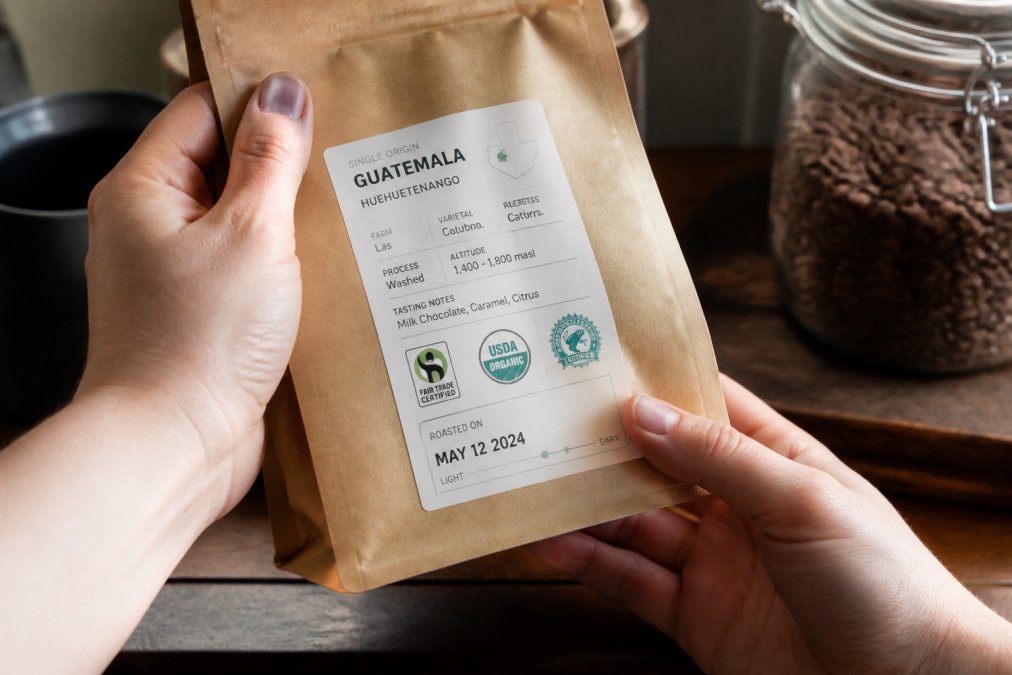
Check for third-party certifications on the bag or website with certification numbers. You can verify these directly, Fair Trade USA and Rainforest Alliance maintain searchable databases of certified operations.
Ask the roaster directly about sourcing practices. A transparent business welcomes detailed questions about supply chain, farmer relationships, and pricing.
Checking Coffee Sustainability Certifications and Avoiding Greenwashing
Sustainability certifications measure environmental and social impact, but not all carry equal weight. Greenwashing, using environmental claims to appear more responsible than practices justify, is common in specialty coffee.
Tracing Your Coffee: From Farm to Cup Through Supply Chain Transparency
Supply chain transparency means you can trace a specific bag backward to the farm where it was grown, requiring documentation at every step.
Red Flags in Coffee Roaster Transparency and What to Ask Before You Buy
Certain patterns in roaster communication signal weak transparency practices or potential greenwashing. Learning to spot these red flags protects you from misleading claims.
Before buying from a roaster, ask these questions directly:
- What is the specific farm or cooperative name for this coffee?
- How much do you pay farmers for this coffee, and how does that compare to commodity prices?
- What certifications apply, and what are the certification numbers?
- Can you provide import documentation or supply chain records?
- How often do you visit the farms you source from?
- What percentage of your coffee is direct trade versus Fair Trade versus other sourcing models?
- What environmental practices does this farm use beyond organic certification?
Verifying Living Wage Claims and Economic Impact
Living wage versus minimum wage represents a critical distinction in ethical coffee sourcing. Many roasters claim they pay "living wages," but this term lacks legal definition in most contexts. Understanding the difference helps you verify whether claims are meaningful.
Conclusion
Verifying ethical coffee sourcing requires moving beyond labels and asking specific questions about supply chain practices, pricing, certifications, and economic impact. Transparency, the willingness to name suppliers, share pricing, provide certifications, and discuss farming practices, is the strongest signal of genuine commitment.
Frequently Asked Questions
What is the difference between Fair Trade and Direct Trade coffee?
Fair Trade coffee is certified by third-party organizations and guarantees minimum prices and labor standards across larger supply chains, though farmers may not know their exact buyer. Direct Trade bypasses intermediaries, roasters work directly with farms, often paying higher prices and building relationships. Direct Trade typically offers greater price transparency and farm-level data, but lacks standardized third-party verification. Both models aim to improve farmer income, but direct trade often delivers higher per-pound payments while Fair Trade provides broader certification and market access.
How can I verify that a coffee roaster is actually paying farmers a living wage?
Request specific price data: ask your roaster what they paid per pound and what percentage reaches the farmer. Legitimate roasters publish this information or provide it upon request. Check if they work with cooperatives (which aggregate smallholder farmers and increase bargaining power) or if they have direct relationships documented on their website. Look for third-party audits or certifications that verify wage claims. Be skeptical of vague language like 'fair prices' without numbers, living wage verification requires actual dollar amounts, not marketing claims.
What red flags should I look for when evaluating a coffee roaster's transparency?
Avoid roasters that cannot name specific farms or regions beyond 'Ethiopia' or 'Colombia.' Red flags include refusing to share pricing details, using only generic certifications without farm-level traceability, making environmental claims without supporting data, or offering no information about harvest practices. Be cautious of roasters that rebrand commodity coffee as specialty or single-origin without origin documentation. Legitimate roasters provide harvest dates, processing methods, altitude, farmer names or cooperative details, and supply chain documentation.
Are organic certifications a reliable indicator of ethical labor practices?
Organic certification verifies farming methods, no synthetic pesticides or fertilizers, but does not guarantee fair wages, safe working conditions, or farmer economic equity. A coffee can be certified organic yet sourced from exploitative supply chains. Combine organic certification with Fair Trade, Direct Trade, or third-party labor audits for a more complete picture. The most ethical coffees carry multiple certifications: organic for environmental stewardship plus Fair Trade or Direct Trade documentation for economic and social impact.
What are the most reliable coffee certifications for ethical sourcing?
Fair Trade USA, Rainforest Alliance, and Bird Friendly are widely recognized third-party certifications. Fair Trade focuses on minimum prices and labor standards. Rainforest Alliance emphasizes environmental and social practices across the supply chain. Bird Friendly (Smithsonian) certifies shade-grown coffee that protects wildlife habitat. Direct Trade lacks a single standard but reputable roasters document direct relationships and pricing. For comprehensive verification, look for coffees with multiple certifications plus published farm-level data, harvest information, and roaster accountability statements.
How do I research a coffee roaster's supply chain transparency?
Start by visiting their website for origin details, farm names, cooperative information, and pricing breakdowns. Contact them directly and ask for supply chain documentation, farm photos, or audit reports. Request specific details: Which farms do they source from? What is the farmer payment per pound? Do they have long-term relationships with producers? Legitimate roasters provide batch-specific traceability, you should know which farm your coffee came from. Check if they publish annual sustainability reports or participate in third-party verification programs that confirm their claims.
What digital tools or platforms help verify ethical coffee sourcing?
Some roasters now use blockchain or QR codes on bags to trace coffee from farm to roastery, allowing consumers to verify origin and payment data. Third-party platforms and certification bodies maintain searchable databases of certified farms and roasters. Ask your roaster if they use digital traceability systems. While not all specialty roasters have adopted these tools yet, their presence signals commitment to transparency. When unavailable, direct communication with your roaster remains the most reliable verification method for supply chain details and ethical claims.
How do I know if a coffee roaster's environmental claims are legitimate?
Look beyond 'eco-friendly' marketing, request specific environmental metrics: water usage, waste reduction practices, carbon offset programs, or renewable energy use in roasting. Verify organic or shade-grown certification through third-party bodies. Ask if they support reforestation or soil conservation programs at origin. Legitimate roasters document environmental stewardship with measurable data and third-party verification, not just claims. Be skeptical of vague language; ethical sourcing combines fair labor practices with documented environmental impact reduction, not just one or the other.