

Small-Batch Roasted Coffee: Benefits That Matter
Table of Contents
- What Small-Batch Coffee Roasting Actually Means
- Small-Batch vs. Mass-Produced Coffee: The Real Differences
- How Batch Size Affects Coffee Roasting Quality
- Freshly Roasted Coffee Benefits: Flavor, Aroma, and Freshness
- Roaster Control: Heat, Airflow, and Real-Time Monitoring
- Roast Development and First Crack: Why Timing Matters
- Is Small-Batch Roasted Coffee Worth the Cost?
- Conclusion
- Frequently Asked Questions
Last Updated: October 5, 2026
What Small-Batch Coffee Roasting Actually Means
Small-batch roasted coffee refers to beans roasted in limited quantities, typically 5-50 pounds per batch, with the roaster maintaining direct control over heat, airflow, and timing. This contrasts with industrial roasting, where thousands of pounds move through automated systems with minimal human intervention. At Far Destinations Coffee, we source beans from trusted farms worldwide and roast them in small batches to bring out each origin's natural flavor, aroma, and character.
Batch size determines what a roaster can achieve. In a small batch, temperature fluctuations are visible and adjustable in real time, so the roaster can pull beans at the exact moment they reach the desired roast profile. Mass-produced roasting sacrifices this precision for volume: adjustments happen at the system level, not the bean level.
Small-batch roasting is about control and intentionality: every decision, from heat to airflow to when to stop the roast, shapes the final cup. This is why roast-to-order works, beans roasted three days ago taste noticeably different from beans roasted three weeks ago.
Small-Batch vs. Mass-Produced Coffee: The Real Differences
The gap between small-batch and mass-produced coffee comes down to three factors: roast profile consistency, freshness window, and flavor clarity.
Mass-produced roasting optimizes for throughput. A large roaster processes hundreds of pounds daily, cycling batches through in 12-15 minutes. Individual beans experience slightly different heat exposure, so some finish development earlier than others.
Small-batch roasting narrows this variance dramatically. A 20-pound batch roasts more evenly because heat distributes consistently across fewer beans. The roaster watches the batch develop, listens for first crack, and adjusts airflow or heat in response.
Freshness tells a different story. Mass-produced coffee sits in warehouses or on shelves for weeks or months, so the printed roast date is often 3-6 weeks old by the time you brew it.
Small-batch roasting thrives on roast-to-order models, with beans roasted closer to the order date, sometimes within days. The difference is tangible: a small-batch roasted coffee brewed five days after roasting tastes noticeably brighter and more complex than a mass-produced coffee that's been sitting for three weeks.
The cost difference reflects this reality. Small-batch roasting requires skilled labor, smaller margins per unit, and faster inventory turnover. Mass production amortizes labor and overhead across thousands of pounds, keeping per-unit costs lower but sacrificing the precision that creates exceptional flavor.
How Batch Size Affects Coffee Roasting Quality
Batch size is the constraint that determines everything else about roasting quality.
In a small batch, heat transfer is predictable. A 15-pound batch in a drum roaster heats evenly because the beans tumble freely and contact the chamber consistently. The roaster sees the entire batch's color development at a glance and hears first crack clearly, then decides whether to accelerate or slow development based on the beans' behavior.
In a large batch, heat transfer becomes a statistical problem. In a 300-pound batch, beans at the center of the drum experience different temperatures than beans at the edges, and some crack before others. The roaster relies on average temperature readings, and by the time they adjust heat, the change affects beans already halfway through development. Consistency suffers.
Batch size also affects the roaster's ability to match roast profile to bean characteristics. Origins differ in density and moisture, Ethiopian beans roast differently than Brazilian beans. A small-batch roaster can adjust the roast curve to suit each origin; a large-batch roaster runs a standardized curve that works adequately for most beans but optimally for none.

The practical outcome: small-batch roasting produces more consistent cups with clearer flavor expression, so the batch as a whole expresses the origin's intended character more reliably than mass-produced alternatives.
| Roasting Factor | Small-Batch | Mass-Produced |
|---|---|---|
| Heat distribution | Even across batch | Variable; center vs. edges differ |
| Real-time adjustments | Frequent; bean-level | Infrequent; system-level |
| Roast consistency | High; beans finish together | Lower; staggered development |
| Flavor clarity | Distinct tasting notes | Muted; blended character |
| Freshness window | Days to weeks | Weeks to months |
Freshly Roasted Coffee Benefits: Flavor, Aroma, and Freshness
The moment beans finish roasting, they begin losing the volatile compounds that create exceptional coffee. Aromatic molecules are light and unstable, escaping as gas especially in the first two weeks.
Freshly roasted coffee, beans roasted within 3-7 days of brewing, captures coffee at its aromatic peak. You taste distinct flavor notes: if the bag says "dried orange and chocolate," you taste those flavors as separate sensations, not vague sweetness. The aroma is bright and the finish clean.
This is why roast-to-order models matter. When you order from Far Destinations Coffee, your beans are roasted shortly after you place your order and arrive still releasing aromatic compounds. The freshness window is measured in days, not weeks.
Aroma is a core component of taste: your sense of smell drives 80-90% of flavor perception. When you sip coffee, aromatic molecules travel from your mouth to your nasal cavity, where olfactory receptors decode them.
Freshness also affects body and mouthfeel. Fresh coffee has a cleaner, brighter body, while aged coffee tastes flat and thin because volatile compounds contribute to perceived body and texture.
The practical benefit: freshly roasted coffee makes better coffee at home, regardless of brewing method. A basic drip machine with fresh beans outperforms an expensive espresso machine with stale beans.
Roaster Control: Heat, Airflow, and Real-Time Monitoring
Small-batch roasting succeeds because the roaster can observe and adjust throughout the process. Heat and airflow are active controls that shape how beans develop.
Heat management determines roast speed. The roaster raises the drum temperature to 350-400°F, and the rate of that rise affects flavor development.
Airflow is equally critical. Air carries heat and removes moisture from beans as they roast. Too much airflow cools the batch and slows roasting; too little leaves moisture trapped inside beans, preventing even development.
Single Origin Favorites Sample Pack →
Real-time monitoring separates small-batch from automated roasting. The roaster watches bean color progress from green to yellow to light brown to medium brown to dark brown, recognizing each stage.
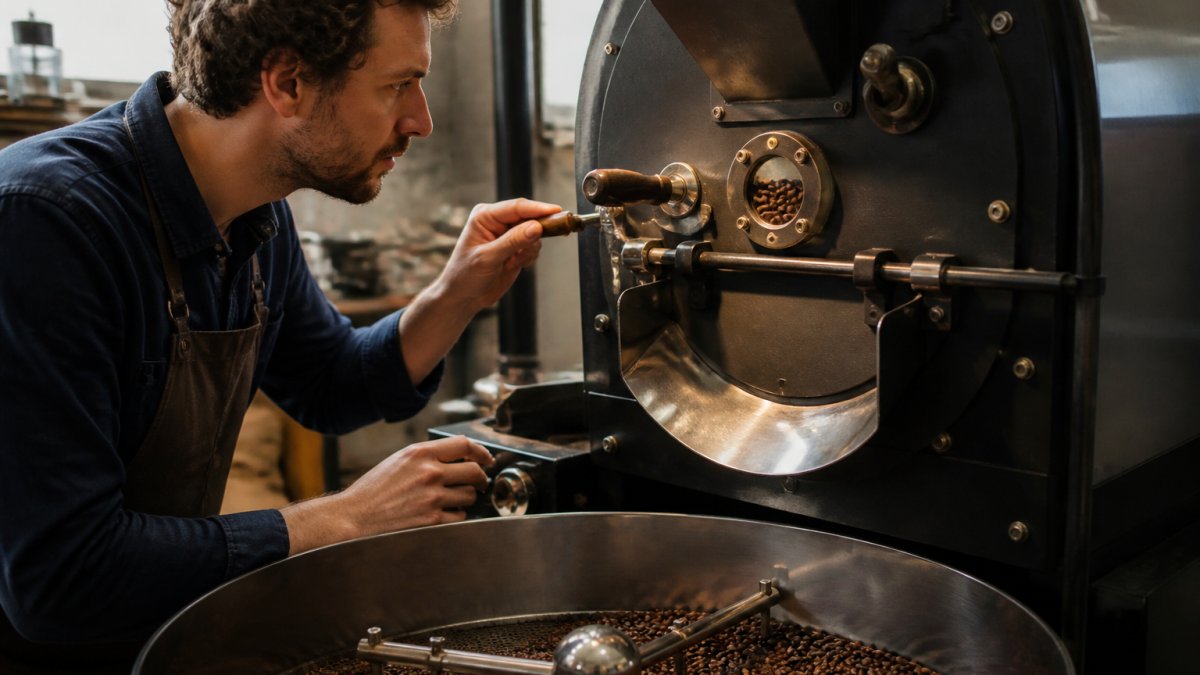
Mass-produced roasting automates these decisions: sensors trigger burner adjustments, cameras detect bean color, and algorithms control airflow. The roaster monitors a dashboard rather than the beans.
The advantage of real-time monitoring is responsiveness: if beans develop slower than expected, the roaster increases heat or reduces airflow; if they race ahead, the roaster backs off.
Roast Development and First Crack: Why Timing Matters
Roast development is how heat transforms green coffee beans into the brown, aromatic beans you brew. Timing at each stage determines the final flavor.
The first stage is drying. Green beans contain 10-12% moisture, which heat drives out over the first 4-6 minutes as the beans turn from gray-green to pale yellow. This stage is necessary but not flavorful.
The second stage is browning. Once moisture drops below a critical threshold, sugars caramelize and proteins break down into aromatic compounds as the beans turn from pale yellow to light brown. Most flavor complexity develops here.
First crack marks the boundary between light and medium roast. At approximately 356-365°F, pressure from roasting gases forces the bean to split slightly, creating an audible crack, a signal that development has reached a critical point.
The third stage is development time. After first crack, the roaster can continue for 30 seconds to 3 minutes depending on the desired roast level.
Timing is everything: the difference between a light and medium roast is often just 45 seconds, and another 45 seconds separates medium from dark.
This timing variance is why small-batch roasted coffee tastes more consistent: every bean reaches the target roast development at approximately the same moment and expresses the intended flavor profile.
Is Small-Batch Roasted Coffee Worth the Cost?
Small-batch roasted coffee costs more: a pound of small-batch specialty coffee typically ranges from $18-$28, while mass-produced grocery coffee costs $8-$12 per pound. The question is whether the quality difference justifies the cost.
The answer depends on what you value. If you view coffee as a functional caffeine delivery system, the cost difference may not be worth it, you'll notice some improvement, but not enough to feel essential.
If you care about flavor, aroma, and the experience of your morning cup, small-batch roasted coffee is worth the investment: the flavor clarity, aromatic complexity, and freshness create a noticeably superior experience in every sip.
There's also a practical consideration: small-batch roasted coffee tastes better longer. Mass-produced coffee begins tasting flat within two weeks of roasting, while small-batch coffee maintains quality for three weeks or longer because it starts fresher.
The value proposition shifts when you factor in freshness and roast-to-order models: you're paying for coffee roasted closer to your order date, a freshness premium that's real and measurable in your cup.
Far Destinations Coffee's Single Origin Favorites Sample Pack offers a practical way to test this value proposition without committing to full-pound purchases. The sample pack includes six 2-ounce portions of different origins, Brazil Santos, Colombia, Costa Rica, Ethiopia, Honduras, and Tanzania, each roasted to highlight that origin's distinct character.

This approach lets you evaluate whether the flavor difference and freshness justify the cost for your palate and brewing setup.
Conclusion
Small-batch roasted coffee delivers measurable advantages in flavor clarity, aroma, and freshness that mass-produced coffee cannot match. The roaster's control over heat, airflow, and roast timing creates consistency and precision that automated systems sacrifice for volume. Freshness amplifies these advantages, small-batch beans roasted days before brewing taste noticeably brighter and more complex than mass-produced coffee weeks old.
The cost difference reflects genuine quality differences, not marketing. If you brew coffee at home and care about your morning cup, small-batch roasted coffee is worth trying. Far Destinations Coffee roasts every batch with attention to each origin's character, sourcing from trusted farms and roasting to order so your beans arrive at peak freshness. Start with the Single Origin Favorites Sample Pack to discover which flavor profiles resonate with your palate.
Frequently Asked Questions
What is the difference between small-batch and mass-produced coffee?
Small-batch roasted coffee is made in smaller quantities, allowing roasters to monitor heat and airflow closely during the roasting process. This precision control produces distinct flavor notes and better aroma. Mass-produced coffee is roasted in large volumes where individual bean monitoring is impossible, resulting in inconsistent roast development and muted flavor clarity. Small-batch roasting also emphasizes roast-to-order practices, ensuring greater freshness when the beans reach you.
Is small-batch roasted coffee actually fresher than coffee from other sources?
Yes, when roasted to order. Small-batch roasters typically ship beans within days of roasting, whereas mass-produced coffee may sit in warehouses or on retail shelves for weeks or months. Freshness matters because coffee begins to lose volatile aromatics immediately after roasting. The roast date on small-batch bags tells you exactly when the beans were roasted, and most specialty roasters recommend using beans within 2-4 weeks of that date for optimal flavor and aroma.
Can I taste the difference with a basic drip coffee maker, or do I need fancy equipment?
You will notice a difference even with a standard drip machine. Small-batch roasted coffee delivers more distinct flavor notes and cleaner aroma simply because the beans are fresher and more carefully developed. While specialty equipment like pour-over or espresso machines can highlight subtle differences, the core benefits of freshness, flavor clarity, and aroma are immediately apparent in any brewing method. Start with a sample pack to experience the difference in your current setup.
How does batch size actually affect the quality of the roast?
Smaller batches allow the roaster to adjust heat and airflow in real time based on how individual beans are developing. In small batches, all beans reach consistent color and development because the roaster can monitor and respond to changes. Large-batch roasting cannot offer this precision; some beans over-develop while others under-develop, leading to inconsistent cup quality. Batch size directly impacts how clearly you taste the coffee's origin characteristics, acidity, and distinct tasting notes.